PUTTING KENTUCKY KIDS FIRST BUILDS A STRONGER KENTUCKY
Jim Flynn • February 4, 2022
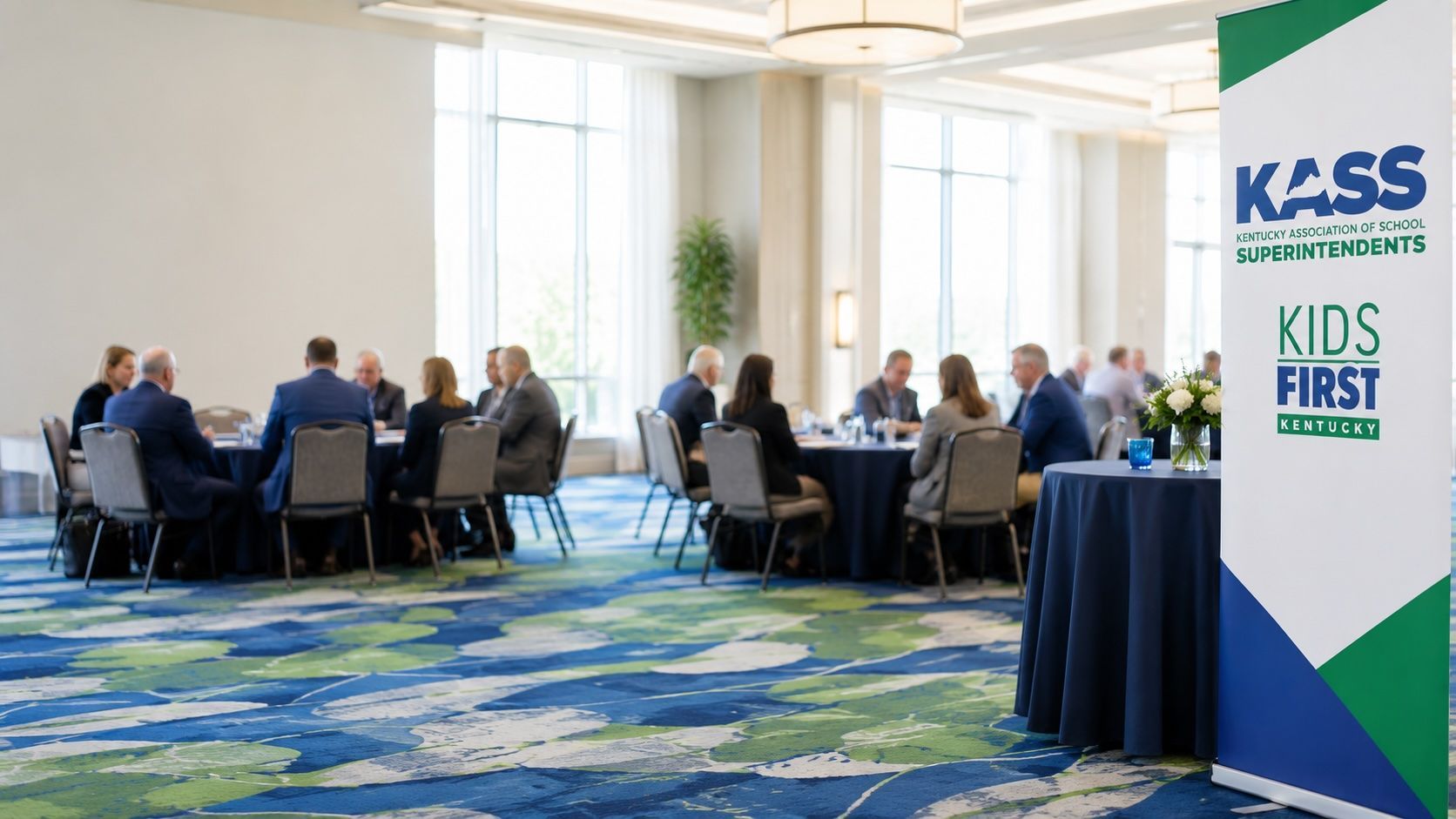
Kentucky’s public schools are entering a pivotal moment. As the General Assembly begins its work in the 2026 legislative session, decisions made in Frankfort will shape the future of teaching, learning, and opportunity across the Commonwealth. As superintendents responsible for educating more than 600,000 students across Kentucky, we believe this moment requires clarity, collaboration, and an unwavering commitment to putting Kids First. Public education thrives when policy reflects both statewide goals and local realities. This session, three legislative priorities rise above all others as essential to student success: a modern accountability system focused on continuous improvement, a sustainable educator workforce pipeline, and fully funded SEEK. These priorities are not theoretical. They directly impact classrooms, communities, and the future of Kentucky’s workforce. Accountability with Purpose Kentucky has an opportunity to lead with an accountability system that reflects what communities value most. Through the Kentucky United We Learn initiative, educators, families, and education leaders have come together to design a framework focused on continuous improvement, local voice, and shared responsibility. This collaborative work emphasizes growth, relevance, and trust rather than compliance alone. The United We Learn framework recognizes that meaningful accountability must balance statewide expectations with locally identified measures of success, allowing communities to define what success looks like while remaining aligned to statewide goals. When communities see themselves reflected in accountability, engagement increases and outcomes improve. KASS continues to support implementation efforts that ensure accountability remains transparent, student-centered, and responsive to community needs. Learn more about the framework through the Kentucky Department of Education’s United We Learn initiative. Building and Sustaining the Educator Workforce Educators are the foundation of Kentucky’s public schools. Teachers, principals, and superintendents shape learning environments where students are supported academically and socially. Yet recruitment and retention challenges threaten the stability of this foundation. Building a strong workforce pipeline requires a long-term approach. Competitive compensation, flexible certification pathways, job-embedded professional learning, and meaningful induction supports all play a role, along with the flexibility for local districts to recruit, support, and retain educators in ways that reflect their unique community contexts. KASS supports continued work with the Education Professional Standards Board to broaden pathways into the profession and ensure talented educators can meet student needs in diverse settings. When we invest in people, we invest directly in students. Strengthening the educator pipeline is not simply a workforce issue. It is one of the most direct student success strategies available to policymakers. Sustaining and Strengthening SEEK Funding Equitable funding remains central to educational opportunity. The Support Education Excellence in Kentucky (SEEK) formula is the Commonwealth’s primary tool for ensuring students have access to comparable educational opportunities regardless of zip code. Over time, inflation has eroded SEEK’s purchasing power, placing additional strain on local districts. Restoring SEEK to its inflation-adjusted 2008 level, fully funding add-ons, and providing long-term predictability are essential steps toward fiscal stability and toward meeting the Commonwealth’s long-term responsibility to provide an efficient system of public education. Adequate funding allows districts to plan responsibly, support staff, and meet the academic and social-emotional needs of students. Additional information on SEEK and Kentucky’s education funding system is available through the Legislative Research Commission. Progress Through Unified Advocacy Kentucky’s education leaders have seen firsthand the impact of unified advocacy. In recent years, collective KASS efforts have helped secure investments in full-day kindergarten, student transportation, and school safety. These wins demonstrate what is possible when education leaders speak clearly, consistently, and together, and when superintendents engage early, often, and constructively with policymakers. While progress has been made, continued advocacy remains essential. Each legislative session presents new challenges and opportunities, and sustained engagement ensures student needs remain at the center of policy decisions. A Moment That Matters This legislative session represents a defining moment for public education in Kentucky. Lawmakers must hear directly from education leaders about what students need to succeed. Public schools remain the Commonwealth’s greatest engine of opportunity, and bold, sustained investment is critical to their success. The path forward is clear. Together, we must lead with urgency, advocate with unity, and act with purpose. KASS will continue to engage lawmakers, partner agencies, and superintendents throughout the session to advance these priorities with clarity and consistency. Kentucky’s superintendents stand ready to work with policymakers to ensure every decision keeps students at the center and strengthens the future of public education.
Public education thrives when communities, educators, and policymakers work together with a shared purpose. In Butler County Schools, that collaboration is translating into meaningful opportunities for students, thoughtful stewardship of resources, and learning experiences that extend far beyond classroom walls. Serving more than 2,100 students across five schools, Butler County Schools is guided by a clear vision: one team with one vision that makes us Butler Strong. Central to that vision is the district’s Portrait of a Learner framework, which emphasizes character, problem solving, communication, collaboration, and global citizenship. These durable skills are woven into every initiative, ensuring students are prepared not only for graduation, but for lifelong success. Expanding Career Pathways Through Real-World Learning Career and technical education plays a vital role in preparing students for the workforce and postsecondary opportunities. In Butler County, legislative support for CTE has strengthened programs at the Area Technology Center, allowing students to engage in authentic, hands-on experiences that mirror real-world expectations. One powerful example is the partnership with Northern Kentucky University, where students participated in an advanced cadaver experience as part of their healthcare pathway. This opportunity challenged students to think critically, apply classroom knowledge, and engage ethically with complex medical concepts. Experiences like this help students clarify career interests while building confidence and professionalism. Research consistently shows that students who participate in high-quality CTE programs are more likely to graduate and pursue meaningful careers. By investing in these pathways, Kentucky is helping districts like Butler County prepare a skilled, adaptable workforce that meets regional and statewide needs. Literacy, Service, and the Power of Connection Academic success is deeply connected to literacy, and Butler County Schools is embracing innovative approaches to nurture both reading skills and student leadership. Supported by literacy-focused legislation, district initiatives encourage students to see learning as something that happens everywhere, not just during the school day. At Morgantown Elementary School, the Books and Braids program brings this philosophy to life. High school students volunteer their time to mentor younger readers, combining literacy practice with relationship building and confidence. These early-morning sessions foster a love of reading while modeling empathy, responsibility, and service. Programs like this highlight the broader impact of literacy investments. When students are engaged as leaders and mentors, learning becomes relational and meaningful, strengthening school culture and community ties. Stewardship That Supports Classrooms Effective use of resources is another cornerstone of student success. Through an innovative energy partnership with Trane Technologies, Butler County Schools has demonstrated how problem solving and collaboration can yield significant results. The district’s efforts have generated more than $96,000 in annual savings while improving ENERGY STAR scores across school facilities. These savings are not just numbers on a spreadsheet. They represent dollars that can be redirected to classrooms, instructional resources, and student supports. They also model responsible stewardship for students, showing how thoughtful decision-making can have lasting benefits. Facility efficiency is increasingly important as districts balance rising costs with the need to maintain safe, healthy learning environments. Butler County’s approach illustrates how legislative support for facility improvements can empower districts to be both fiscally responsible and student focused. Collaboration as a Catalyst for Growth None of these successes happen in isolation. Butler County Schools benefits from strong partnerships with higher education institutions, community organizations, and local leaders who share a commitment to student success. These relationships expand learning opportunities and ensure students are supported by a broad network of advocates. Collaboration within the district is equally important. By aligning initiatives to the Portrait of a Learner framework, educators across schools work toward common goals while meeting the unique needs of their students. This shared purpose strengthens consistency, equity, and outcomes. Aligning With Kentucky’s Education Priorities The work underway in Butler County reflects broader legislative priorities for Kentucky’s public schools. Continued support for Read to Succeed and Numeracy Counts initiatives underscores the importance of strong foundational skills. Investments in CTE and facility efficiency align with efforts to strengthen the education pipeline and ensure responsible use of public funds. When policy and practice are aligned, districts are better positioned to innovate, plan for the future, and respond to local needs. Butler County Schools’ success demonstrates the value of sustained, thoughtful investment in public education. Looking Ahead As Butler County Schools looks to the future, the focus remains clear: expand opportunities, strengthen partnerships, and keep students at the center of every decision. With continued legislative support and community collaboration, the district will build on its momentum, ensuring that every learner has access to the experiences and supports they need to thrive. Together, we are building stronger schools, brighter futures, and communities that are truly Butler Strong. Learn more about Butler County Schools’ work by visiting Butler County Schools website.

For more than thirty years, Kentucky has relied on the Support Education Excellence in Kentucky formula to fulfill a simple but powerful promise: every child deserves access to a high-quality public education, no matter their zip code. The SEEK formula was designed to make this promise real by supporting equity, strengthening local schools, and prioritizing the needs of students and educators. Today, that promise remains just as vital. Our districts continue to serve students with rising academic, mental health, transportation, and safety needs. Yet while expectations for schools have grown, state funding has not kept pace with real costs. As a result, local communities carry an increasing share of the burden, which challenges fairness and weakens our commitment to the Kids First mission. Understanding the Funding Gap When we look at historical trends, the issue becomes clearer. In 2008, the inflation-adjusted SEEK base was the equivalent of $5,743 per student. Today, even with periodic increases, Kentucky has not restored that level of investment. Districts, especially those with lower property wealth, are forced to rely heavily on local revenue to maintain basic programs, staffing, and student supports. This widens the gap between communities and places additional pressure on families. As we move into a new budget cycle, this is a central KASS legislative priority. Closing the SEEK shortfall and ensuring sustainable growth in state funding is essential not just for the next two years but for long-term district planning and stability. Why Add-Ons Matter for Students The SEEK base is only part of the equation. Add-on components provide targeted funding for transportation, full-day kindergarten, mental health professionals, school safety officers, and other essential services. These supports reflect the real needs of Kentucky students and the increasing expectations placed on schools. Fully funding these add-ons is not optional. It is a core part of delivering on our constitutional responsibility to provide every child with an efficient system of common schools. KASS continues to advocate for full reimbursement for school resource officers, codification of school facility funding efficiencies (such as those in HB 727), and financial impact statements on every education bill to prevent unfunded mandates for districts. Moving Toward a Stronger, More Sustainable SEEK SEEK can and should evolve to reflect the modern realities of public education. KASS supports improvements that include: Annual SEEK adjustments that track inflation so districts are not losing purchasing power each year Modernizing add-on structures to account for actual costs Aligning state and local contributions toward a sustainable 60/40 balance Ensuring consistency and predictability so districts can build long-term budgets with confidence These steps strengthen local schools, reduce inequities across communities, and honor Kentucky’s commitment to public education. Keeping Kids First: Why This Matters Now When we talk about SEEK, we are ultimately talking about fairness. A child in a rural Eastern Kentucky county deserves every opportunity available to a child in a suburban or urban district. With consistent and equitable funding, schools can continue: Recruiting and retaining high-quality educators Expanding mental health and academic supports Providing safe learning environments Offering robust pathways in career and technical education, college preparation, and workforce development These goals align directly with KASS’s 2026 priorities: investing in educator pipelines, reducing outdated mandates, expanding learning opportunities, and strengthening the financial foundation of Kentucky’s schools. A Path Forward for Kentucky The way ahead is clear. Kentucky must commit to a sustainable, fully funded SEEK system that acknowledges the real cost of educating our children. By doing so, we keep our promise to students, families, and communities. We also ensure that public education remains the Commonwealth’s most powerful driver of opportunity, mobility, and economic strength. Together, with a unified voice and a Kids First vision, we can build a future where every student across Kentucky is supported, valued, and prepared for success.

Strong schools are built on strong leadership. Across Kentucky, superintendents understand that thriving classrooms and successful districts depend on more than one leader at the top. They rely on principals, assistant principals, teacher-leaders, instructional coaches, and district staff who share responsibility for shaping the future of public education. At KASS, we believe that every district deserves a great superintendent, every school deserves a great principal, and every classroom deserves a great teacher. None of that happens by accident. Leadership Development: The Foundation of Strong Schools Recent statewide data affirms what local leaders see every day: leadership pipelines matter. When schools intentionally invest in developing leadership capacity, they cultivate innovation, stability, and long-term success. These pipelines ensure that when experienced leaders retire or change roles, a new generation is prepared to step forward with skill and vision. As KDE continues expanding professional learning and leadership pathways, the message is clear: leadership development is not a luxury—it is essential. Kentucky schools are meeting rising expectations related to mental health, school safety, family engagement, career readiness, and personalized learning. Meeting these demands requires a deep bench of capable, well-supported leaders. Leadership Pipelines: Essential, Not Optional Investing in leadership pipelines means creating systems that identify, mentor, and prepare future school leaders. These systems help districts: Identify teachers with leadership potential Provide targeted coaching and mentoring Offer professional development aligned with district goals The Wallace Foundation reports that school leadership is second only to classroom instruction in its influence on student achievement. Kentucky districts that invest in structured pipelines are creating the conditions for sustained excellence. But leadership development in Kentucky is not limited to adults. Increasingly, schools recognize that student leadership is essential to student success . Whether through student voice initiatives, service learning, or Portraits of a Learner that emphasize collaboration, initiative, and agency, schools are intentionally cultivating leadership in young people. As I often reminded my own leadership teams, if students aren’t in on it, our efforts will fall short of their intended impact. When we invest in strong adult leadership pipelines, we make possible equally strong student leadership pipelines—ensuring that learners graduate empowered, engaged, and ready to lead in their communities and careers. Aligning with Kentucky’s Education Priorities KASS has long emphasized that education leadership is a workforce priority. The 2026 KASS Legislative Priorities reinforce this message through policies that support educator recruitment, retention, and leadership development—broadening certification options, expanding job-embedded professional learning, and strengthening grow-your-own initiatives such as Educators Rising. Just as importantly, KASS advocates for reducing unnecessary bureaucratic burdens on schools so leaders can focus on students, not paperwork. Some have argued that districts are growing administrative staff unnecessarily. In reality, the expansion of district-level responsibilities is a direct response to state and federal mandates —most of them well intentioned, but increasingly complex. These requirements lean heavily toward compliance rather than engagement, empowerment, or student impact, and they come with extensive reporting, monitoring, and oversight obligations. When laws are passed quickly, without full consideration of the operational impact, they can create wide-ranging, unintended consequences—especially when they are underfunded or unfunded. These mandates directly shape district staffing patterns, making administrative support a necessity rather than a choice. If Kentucky wants leaner bureaucracy, the solution is not to cut people who are required to carry out legally mandated tasks—it is to r eview and streamline the mandates themselves so schools can redirect time, resources, and talent back into developing strong leaders at every level. This vision aligns directly with United We Learn , which calls on Kentucky to rethink accountability and build systems that empower, rather than constrain, educators and local communities. Investing in People for Student Success Leadership pipelines strengthen the teaching profession and improve outcomes for every learner. Research from the National Bureau of Economic Research shows that schools led by effective principals see higher teacher retention and stronger student performance. And when adult leaders focus on empowering students, the impact multiplies. Schools with strong leadership cultures give students more opportunities to practice agency, take initiative, and develop the skills emphasized in Kentucky’s Portrait of a Learner. KASS continues to advocate for legislative funding that prioritizes people over programs. Districts need flexibility and resources to provide competitive salaries, mentoring programs, and professional learning communities that elevate educators at every stage of their careers—and, in turn, elevate the leadership pathways available to students. A Shared Vision for the Future For Kentucky’s superintendents, this work is both urgent and hopeful. Leadership development provides stability during times of change and momentum during times of challenge. Across the Commonwealth, superintendents are cultivating a culture of mentorship, collaboration, and lifelong learning that benefits every student. By strengthening Kentucky’s leadership pipeline—both for adults and for students—we ensure that every child learns in a school led by compassionate, highly skilled professionals committed to keeping Kids First . That is how we build a stronger, more resilient future for Kentucky’s public schools.
Nestled in the hills of Eastern Kentucky, Morgan County Schools stands as a powerful example of what happens when vision, community, and legislative support come together to serve every student. With around 1,600 students across six schools, the district is small in size but large in heart—driven by a deep belief that every child deserves the opportunity to thrive. Through the implementation of a Multi-Tiered System of Supports (MTSS), Morgan County is not only improving academic outcomes but also redefining what equitable learning looks like in rural education. This work is made possible through targeted state and federal investments, including increased SEEK and Tier I funding and legislative support for the Read to Succeed and Numeracy Counts Act. A Community Rooted in Resilience and Hope Morgan County’s story begins with a tradition of strength and resilience. In a region where many families face economic hardship, the schools have become the heartbeat of the community—a place where hope is cultivated and opportunity takes root. Superintendent Dr. Ralph W. Hamilton and his leadership team understand that rural districts must often do more with less. Legislative resources have provided essential flexibility—allowing Morgan County to prioritize “people over programs,” attract and retain talented educators, and align instruction to the unique needs of their students. This emphasis on local priorities reflects the broader goals of the Kentucky Association of School Superintendents (KASS) 2026 Legislative Agenda, which calls for closing the SEEK funding shortfall, improving school construction funding, and strengthening the educator pipeline. Morgan County’s work exemplifies how these priorities can come to life at the district level. What MTSS Means for Students MTSS is a proactive, evidence-based approach that helps schools meet students where they are—academically, behaviorally, and emotionally. In Morgan County, the model is built around three tiers of support: Tier I: Universal instruction that serves over 80% of students through high-quality, grade-level teaching and schoolwide supports. Tier II: Targeted interventions for roughly 15% of students who need additional help in specific skill areas. Tier III: Intensive, individualized interventions for the 5% of students who require specialized, sustained support. This system ensures that learning is fluid and responsive. Teachers regularly review data to identify student needs, adjust instruction, and collaborate across grade levels. The goal is not just to improve test scores—but to create confident, independent learners prepared to succeed in life beyond the classroom. The Power of Partnership The success of MTSS in Morgan County is not solely the result of internal strategy—it’s the outcome of partnerships that span the entire community. Local businesses provide mentorships and work-based learning experiences that give students real-world perspective. Community organizations play a vital role in social-emotional learning (SEL) and family engagement, while nearby higher education institutions open doors to advanced coursework and career pathways. These connections extend the classroom into the community, reflecting one of KASS’s core advocacy goals: empowering local districts to collaborate for sustainable, community-centered learning. Results That Speak for Themselves Morgan County’s investment in MTSS is already producing measurable and meaningful results: Improved academic performance on both state and local assessments. Consistently high graduation rates that reflect a culture of persistence. Decreased behavioral referrals, signaling stronger student engagement. Higher attendance rates, often linked to the sense of belonging cultivated in supportive classrooms. Teachers report increased positive behavior, engagement, and collaboration among students. Through targeted interventions and small-group instruction, students build confidence and master challenging content. The district’s commitment to holistic education is embodied in its Portrait of a Learner—encouraging each child to grow as an Impactful Citizen, Confident Contributor, Empathetic Servant, Solution Seeker, and Effective Communicator. Celebrating Excellence and Recognition Morgan County’s schools are no strangers to recognition. Ezel Elementary has twice been named a National Blue Ribbon School. East Valley Elementary earned the same distinction once and ranked among the top ten schools statewide in 2024 performance on the Kentucky Summative Assessment. All six district schools—East Valley, Ezel, Morgan Central, Wrigley Elementary, Morgan County Middle, and Morgan County High—have been recognized as Prichard Committee Family Friendly Schools. These achievements represent far more than accolades; they are evidence of a district culture built on collaboration, equity, and continuous improvement. Legislative Support: A Lifeline for Rural Opportunity Morgan County’s success is directly tied to strong legislative partnerships and advocacy for equitable funding. Increased SEEK and Tier I funding has allowed the district to recruit and retain high-quality educators, improve compensation, and sustain critical programs that larger districts often take for granted. This aligns closely with KASS’s call to close the SEEK shortfall and ensure that Kentucky’s funding formula provides a fair opportunity for all students, regardless of zip code. Similarly, continued investment in the Read to Succeed and Numeracy Counts Act helps ensure that foundational literacy and numeracy skills are supported from the earliest grades—an essential step toward fulfilling the United We Learn framework’s vision for lifelong learning. Looking Ahead: Sustaining the Momentum For Morgan County Schools, MTSS is not a one-time initiative—it’s an ongoing process of reflection, collaboration, and growth. As the district continues to build capacity, expand professional learning, and engage families, it serves as a model for how Kentucky’s rural districts can deliver innovation with limited resources. Dr. Hamilton notes that the district’s greatest strength lies in its people: “When we prioritize people over programs, we build a system where every student—and every educator—can succeed.” This mindset perfectly captures KASS’s vision for Kentucky’s future: a united, learner-centered system where every child, regardless of background, has the tools to succeed. Why This Matters for Kentucky’s Future The lessons from Morgan County are clear: Legislative investments in equity yield transformative outcomes. Supporting educators drives systemic improvement. Collaboration among schools, families, and communities creates sustainable success. As Kentucky continues to build on the United We Learn vision, districts like Morgan County demonstrate what’s possible when funding, flexibility, and local leadership align. Their story proves that even in the most rural corners of the Commonwealth, the pursuit of excellence knows no limits. Join the Movement Learn more about Morgan County Schools’ work by following Morgan County Schools on Facebook or @SuptMCS on X. Together, we’re shaping the future of Kentucky’s public education—one student, one school, and one strong community at a time.