November 14, 2025
Building Strong Foundations: How Morgan County Schools’ MTSS Model is Redefining Student Success
Nestled in the hills of Eastern Kentucky, Morgan County Schools stands as a powerful example of what happens when vision, community, and legislative support come together to serve every student. With around 1,600 students across six schools, the district is small in size but large in heart—driven by a deep belief that every child deserves the opportunity to thrive.
Through the implementation of a Multi-Tiered System of Supports (MTSS), Morgan County is not only improving academic outcomes but also redefining what equitable learning looks like in rural education. This work is made possible through targeted state and federal investments, including increased SEEK and Tier I funding and legislative support for the Read to Succeed and Numeracy Counts Act.
A Community Rooted in Resilience and Hope
Morgan County’s story begins with a tradition of strength and resilience. In a region where many families face economic hardship, the schools have become the heartbeat of the community—a place where hope is cultivated and opportunity takes root.
Superintendent Dr. Ralph W. Hamilton and his leadership team understand that rural districts must often do more with less. Legislative resources have provided essential flexibility—allowing Morgan County to prioritize “people over programs,” attract and retain talented educators, and align instruction to the unique needs of their students.
This emphasis on local priorities reflects the broader goals of the Kentucky Association of School Superintendents (KASS) 2026 Legislative Agenda, which calls for closing the SEEK funding shortfall, improving school construction funding, and strengthening the educator pipeline. Morgan County’s work exemplifies how these priorities can come to life at the district level.
What MTSS Means for Students
MTSS is a proactive, evidence-based approach that helps schools meet students where they are—academically, behaviorally, and emotionally. In Morgan County, the model is built around three tiers of support:
- Tier I: Universal instruction that serves over 80% of students through high-quality, grade-level teaching and schoolwide supports.
- Tier II: Targeted interventions for roughly 15% of students who need additional help in specific skill areas.
- Tier III: Intensive, individualized interventions for the 5% of students who require specialized, sustained support.
- This system ensures that learning is fluid and responsive. Teachers regularly review data to identify student needs, adjust instruction, and collaborate across grade levels. The goal is not just to improve test scores—but to create confident, independent learners prepared to succeed in life beyond the classroom.
The Power of Partnership
The success of MTSS in Morgan County is not solely the result of internal strategy—it’s the outcome of partnerships that span the entire community. Local businesses provide mentorships and work-based learning experiences that give students real-world perspective.
Community organizations play a vital role in social-emotional learning (SEL) and family engagement, while nearby higher education institutions open doors to advanced coursework and career pathways.
These connections extend the classroom into the community, reflecting one of KASS’s core advocacy goals: empowering local districts to collaborate for sustainable, community-centered learning.
Results That Speak for Themselves
Morgan County’s investment in MTSS is already producing measurable and meaningful results:
- Improved academic performance on both state and local assessments.
- Consistently high graduation rates that reflect a culture of persistence.
- Decreased behavioral referrals, signaling stronger student engagement.
- Higher attendance rates, often linked to the sense of belonging cultivated in supportive classrooms.
Teachers report increased positive behavior, engagement, and collaboration among students. Through targeted interventions and small-group instruction, students build confidence and master challenging content. The district’s commitment to holistic education is embodied in its Portrait of a Learner—encouraging each child to grow as an Impactful Citizen, Confident Contributor, Empathetic Servant, Solution Seeker, and Effective Communicator.
Celebrating Excellence and Recognition
Morgan County’s schools are no strangers to recognition.
- Ezel Elementary has twice been named a National Blue Ribbon School.
- East Valley Elementary earned the same distinction once and ranked among the top ten schools statewide in 2024 performance on the Kentucky Summative Assessment.
- All six district schools—East Valley, Ezel, Morgan Central, Wrigley Elementary, Morgan County Middle, and Morgan County High—have been recognized as Prichard Committee Family Friendly Schools.
These achievements represent far more than accolades; they are evidence of a district culture built on collaboration, equity, and continuous improvement.
Legislative Support: A Lifeline for Rural Opportunity
Morgan County’s success is directly tied to strong legislative partnerships and advocacy for equitable funding.
Increased SEEK and Tier I funding has allowed the district to recruit and retain high-quality educators, improve compensation, and sustain critical programs that larger districts often take for granted. This aligns closely with KASS’s call to close the SEEK shortfall and ensure that Kentucky’s funding formula provides a fair opportunity for all students, regardless of zip code.
Similarly, continued investment in the Read to Succeed and Numeracy Counts Act helps ensure that foundational literacy and numeracy skills are supported from the earliest grades—an essential step toward fulfilling the United We Learn framework’s vision for lifelong learning.
Looking Ahead: Sustaining the Momentum
For Morgan County Schools, MTSS is not a one-time initiative—it’s an ongoing process of reflection, collaboration, and growth. As the district continues to build capacity, expand professional learning, and engage families, it serves as a model for how Kentucky’s rural districts can deliver innovation with limited resources.
Dr. Hamilton notes that the district’s greatest strength lies in its people: “When we prioritize people over programs, we build a system where every student—and every educator—can succeed.”
This mindset perfectly captures KASS’s vision for Kentucky’s future: a united, learner-centered system where every child, regardless of background, has the tools to succeed.
Why This Matters for Kentucky’s Future
The lessons from Morgan County are clear:
- Legislative investments in equity yield transformative outcomes.
- Supporting educators drives systemic improvement.
- Collaboration among schools, families, and communities creates sustainable success.
As Kentucky continues to build on the United We Learn vision, districts like Morgan County demonstrate what’s possible when funding, flexibility, and local leadership align. Their story proves that even in the most rural corners of the Commonwealth, the pursuit of excellence knows no limits.
Join the Movement
Learn more about Morgan County Schools’ work by following Morgan County Schools
on Facebook or @SuptMCS on X.
Together, we’re shaping the future of Kentucky’s public education—one student, one school, and one strong community at a time.
December 6-8 at the Louisville Marriott Downtown Organizations that support Kentucky public school districts can now register to exhibit, sponsor, or join as a Preferred Partner at the 2026 KASS Annual Conference, December 6-8 at the Louisville Marriott Downtown. The Annual Conference is the largest KASS gathering of the year, bringing Kentucky's school superintendents together for professional learning, peer connection, and conversation about the work ahead for their districts. For superintendents, the partners in the room are part of that work. For organizations, it is a direct and personal way to understand what district leaders need. What This Conference Means for Districts and Partners Kentucky's superintendents are the chief decision-makers for districts across the Commonwealth. They are accountable for governance, operations, and long-term student outcomes, and they come to KASS events to learn alongside peers and find partners who can help them do the job well. Because KASS is the state organization dedicated solely to superintendents, partners at the Annual Conference are in the room with the leaders who set direction and shape priorities for their districts. This year's conference theme is The Power of Possibility: Empowering Learners. Igniting Innovation. Transforming Education. Conference at a Glance
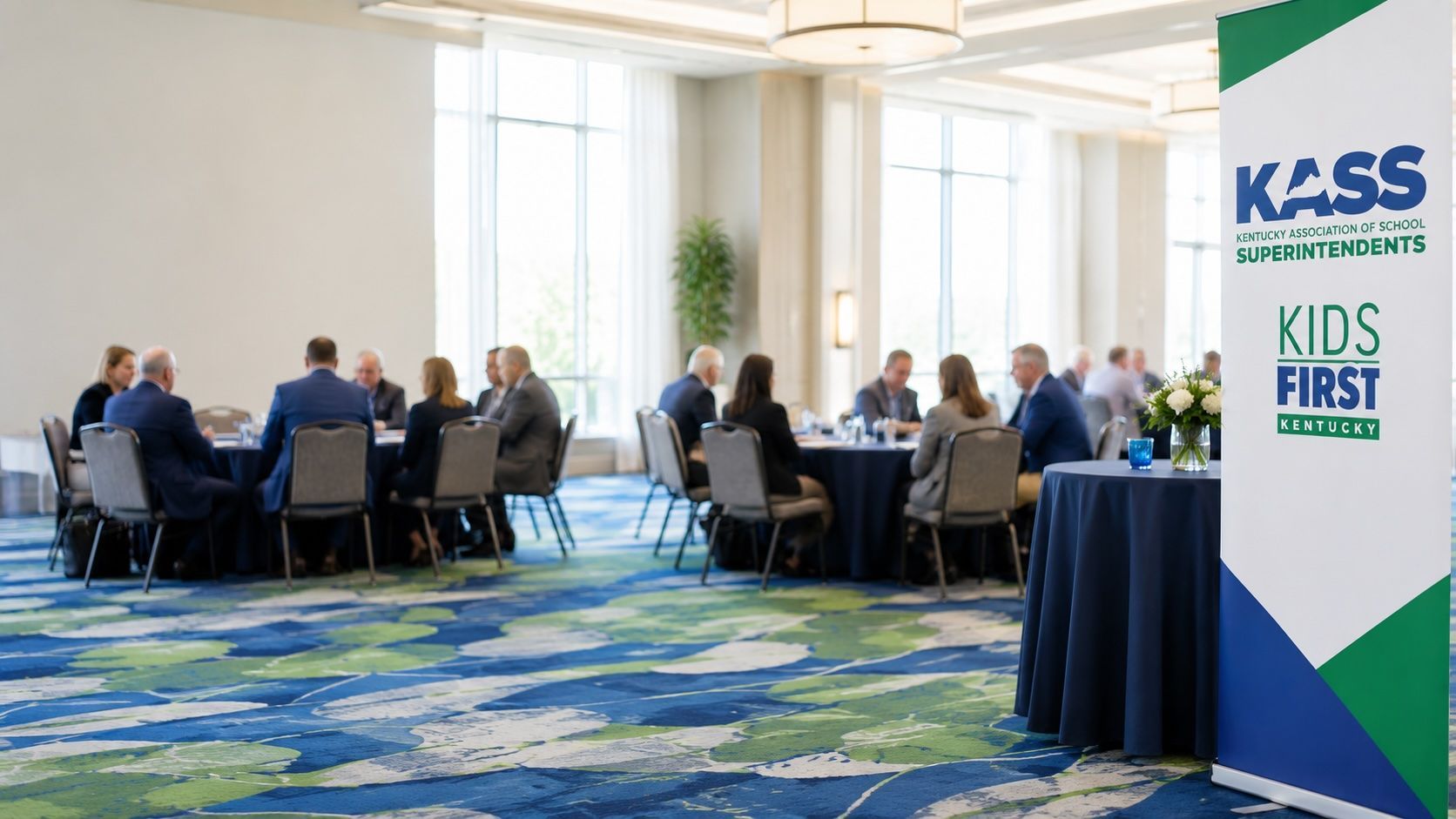
The KASS Fall Superintendents Summit brings Kentucky district leaders together September 8–9 in Lexington for focused conversation and peer connection. Limited sponsorship opportunities available for organizations committed to Kentucky public education.
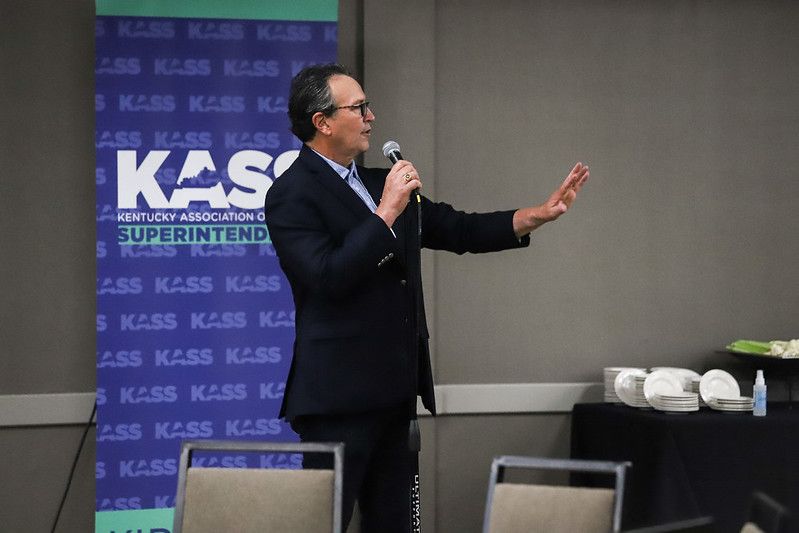
Join Kentucky superintendents at the KASS Summer Summit in Lexington. Limited sponsorship opportunities available for meaningful, relationship-driven engagement.

HB 757 phases out state equalization for facility nickels, and every Kentucky district is now on a clock. Here is what the 2026 session means for school construction funding and what superintendents must do before April 15.
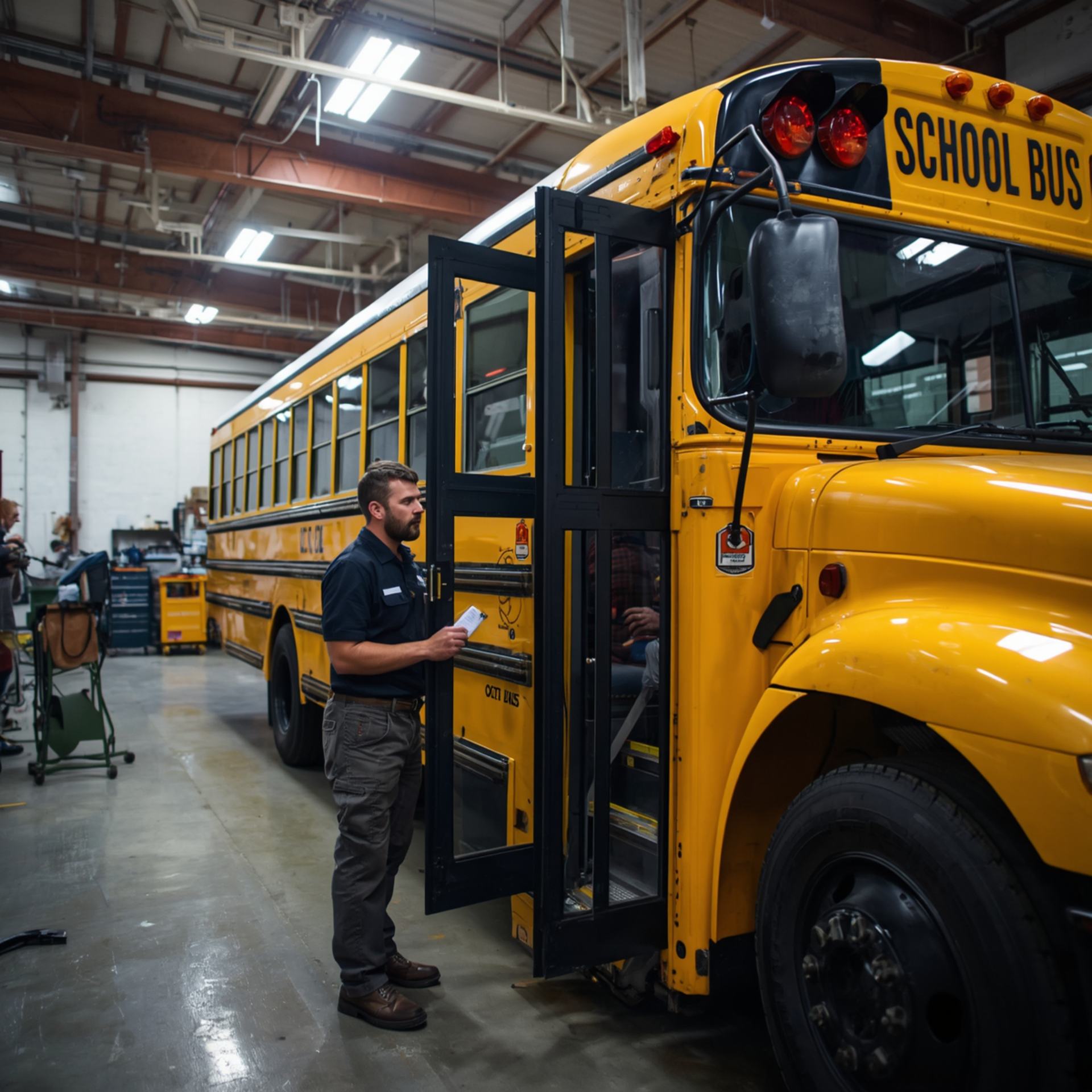
Kentucky law requires full transportation funding — but the gap between obligation and appropriation costs districts $94 million a year. Here's what that means for students, buses, and classrooms across the Commonwealth.

Kentucky's HB 257 adds three new accountability indicators — National Board certification rates, 8th grade Algebra 1 enrollment, and FAFSA completion — to the state's overall district score. Here's why district leaders are raising concerns, and why this conversation isn't over.