February 15, 2026
The SEEK Base and the Power of Telling Local Stories

When education funding debates move into budget season, conversations often revolve around line items, percentages, and projections. For district superintendents, however, the implications are far more tangible. They are measured in teacher salaries, bus replacement schedules, classroom resources, and student services.
This session’s budget conversation centers heavily on recurring revenue through the SEEK formula. While multiple targeted investments are under discussion, the clearest message emerging is the importance of the SEEK base and its connection to district stability.
Why the SEEK Base Matters
The SEEK base is not simply a number in statute. It is the primary recurring funding mechanism that districts rely on for sustainable planning. When the base increases meaningfully, districts gain the ability to invest in instruction, remain competitive in staff compensation, and address long-term workforce challenges.
When it remains flat, the pressure shifts locally.
Over time, districts have experienced diminished buying power relative to 2008 levels. Inflationary pressures and rising operational costs continue to compound that challenge. Without recurring revenue growth, districts absorb those increases within fixed budgets.
The result is not theoretical. It is operational.
A Local Example: Rockcastle County Schools
A funding impact report shared this week illustrates how these pressures manifest at the district level .
On page 1 of the report, Rockcastle County Schools documents
a 26 percent decrease in purchasing power compared to 2008. Bus replacement costs increased significantly, with a single bus rising from $97,115 in 2021 to $154,702 in 2026. The district will purchase four buses at a total cost of $618,808.
Insurance costs tell a similar story. General and property insurance increased from $168,977 in 2020 to $467,555 in 2025 . Instructional curriculum now totals $1.2 million annually, and even a limited Chromebook replacement cycle at select grade 0 levels requires $300,000 plus additional charger Y .
These are not optional expenses. They are core operational realities.
Transportation and Instructional Tradeoffs
On page 3 of the same report, Rockcastle details the transportation impact specifically . Fully funding SEEK transportation using prior-year spring data would provide $413,906, nearly funding three of the four buses needed for the upcoming year.
Over a ten-year period, the district estimates a $7,040,240 deficit resulting from transportation not being fully funded .
When transportation funding falls short, districts must redirect general fund dollars to close the gap. That shift carries instructional consequences: delayed salary adjustments, postponed program investments, and limited capacity to address workforce shortages.
Superintendents presenting to budget committees emphasized this dynamic clearly. One district reported being funded at roughly 74 percent of actual transportation cost, requiring approximately $900,000 to be covered locally. The instructional opportunity cost of that gap is real.
Tier I and Geographic Equity
The third recurring revenue lever under discussion is Tier I equalization. An increase from 17.5 percent toward 20 percent has been referenced as a way to strengthen equity across districts with varying property wealth.
As described in the Rockcastle report on page 4 , recurring SEEK funding supports:
- Expanded mental health services
- Special education and intervention staffing
- School resource officers
- Student services such as counseling and food access
- Cost-of-living salary increases
- Rising instructional programming costs
These needs do not fluctuate annually. They are ongoing, and they require stable funding.
The Power of Telling the Story
The most effective advocacy this week did not rely on abstract percentages. It relied on district-level numbers and clearly articulated tradeoffs.
Transportation funded at 71 to 74 percent.
Four buses costing over $600,000.
Insurance increases of nearly $300,000 in five years.
A decade-long transportation deficit exceeding $7 million.
These details shift the conversation from policy theory to district consequence.
Legislators consistently respond to local impact framed through data and student outcomes. When superintendents connect SEEK base increases to competitive salaries, to workforce retention along border states, to expanded mental health supports, the budget conversation becomes grounded in operational reality.
Recurring Revenue Is the Stability Strategy
Targeted investments have value. School safety, induction programs, and principal mentoring initiatives all matter. But recurring revenue remains the foundation.
The SEEK base, fully funded transportation using current data, and equitable Tier I adjustments represent structural stability. They allow districts to plan beyond a single fiscal year. They protect classroom resources from operational volatility. They restore balance between state and local funding responsibility.
At the center of this discussion is not a formula. It is stewardship.
District leaders are tasked with protecting instructional quality, sustaining safe environments, and maintaining public trust. Recurring revenue allows them to do that with foresight rather than reaction.
Moving Forward
Budget negotiations will continue to evolve. Early signals suggest interest in raising the SEEK base and improving transportation funding. Final outcomes will depend on continued engagement and clear communication from district leaders.
The most effective approach remains consistent:
Present the numbers.
Connect them to instruction.
Explain the consequence of inaction.
Reinforce the long-term return on investment.
As the Rockcastle report concludes, the return on investment is not abstract. It is the future leaders of Kentucky communities .
In this budget cycle, the SEEK base is more than a funding mechanism. It is the clearest signal of the Commonwealth’s commitment to sustaining strong, stable, and future-ready public schools.
December 6-8 at the Louisville Marriott Downtown Organizations that support Kentucky public school districts can now register to exhibit, sponsor, or join as a Preferred Partner at the 2026 KASS Annual Conference, December 6-8 at the Louisville Marriott Downtown. The Annual Conference is the largest KASS gathering of the year, bringing Kentucky's school superintendents together for professional learning, peer connection, and conversation about the work ahead for their districts. For superintendents, the partners in the room are part of that work. For organizations, it is a direct and personal way to understand what district leaders need. What This Conference Means for Districts and Partners Kentucky's superintendents are the chief decision-makers for districts across the Commonwealth. They are accountable for governance, operations, and long-term student outcomes, and they come to KASS events to learn alongside peers and find partners who can help them do the job well. Because KASS is the state organization dedicated solely to superintendents, partners at the Annual Conference are in the room with the leaders who set direction and shape priorities for their districts. This year's conference theme is The Power of Possibility: Empowering Learners. Igniting Innovation. Transforming Education. Conference at a Glance
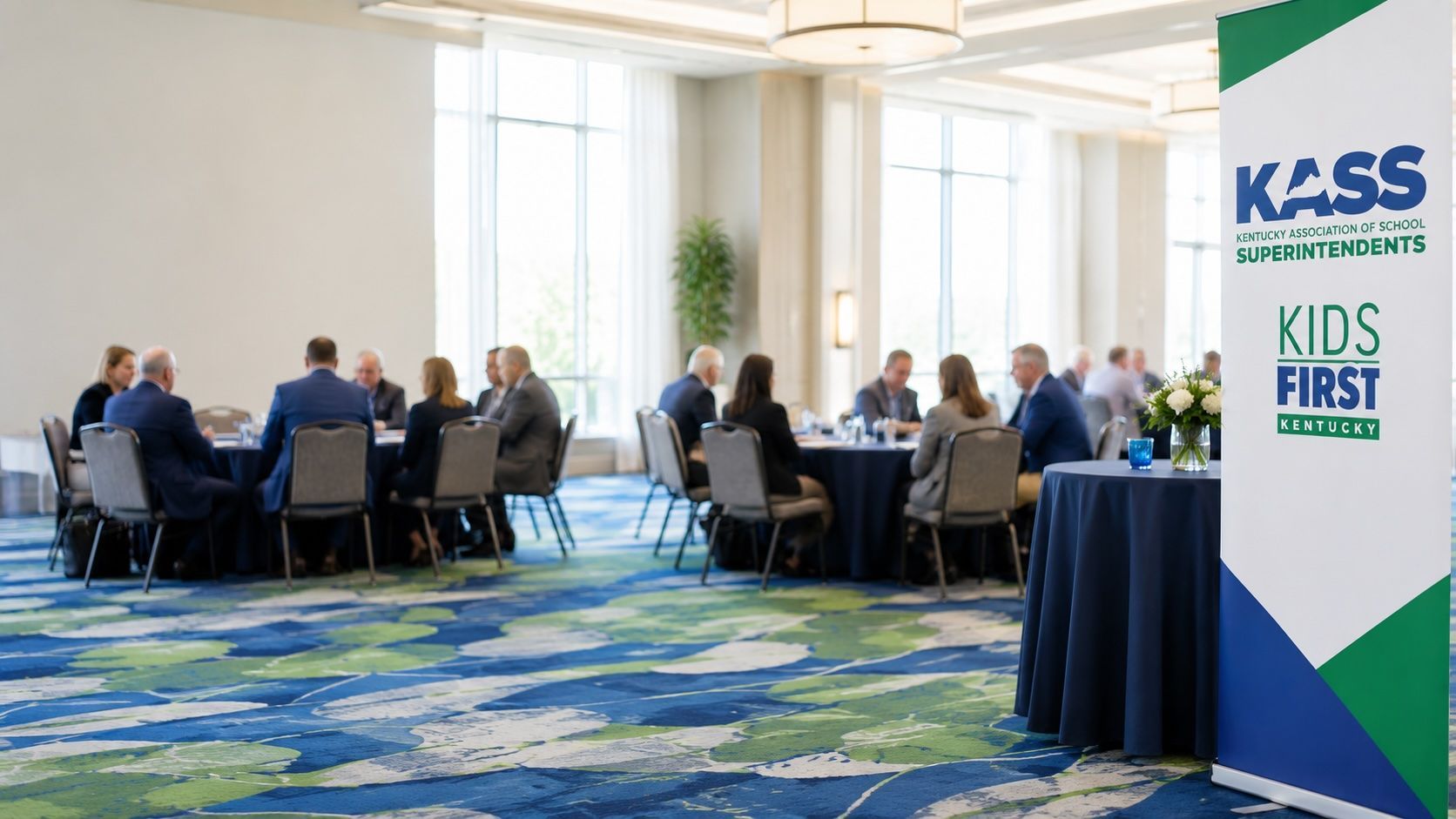
The KASS Fall Superintendents Summit brings Kentucky district leaders together September 8–9 in Lexington for focused conversation and peer connection. Limited sponsorship opportunities available for organizations committed to Kentucky public education.
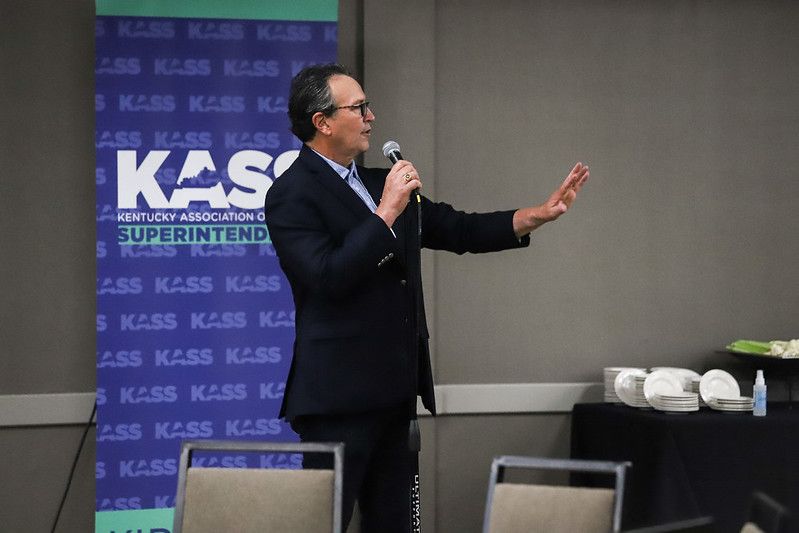
Join Kentucky superintendents at the KASS Summer Summit in Lexington. Limited sponsorship opportunities available for meaningful, relationship-driven engagement.
HB 757 phases out state equalization for facility nickels, and every Kentucky district is now on a clock. Here is what the 2026 session means for school construction funding and what superintendents must do before April 15.
Kentucky law requires full transportation funding — but the gap between obligation and appropriation costs districts $94 million a year. Here's what that means for students, buses, and classrooms across the Commonwealth.

Kentucky's HB 257 adds three new accountability indicators — National Board certification rates, 8th grade Algebra 1 enrollment, and FAFSA completion — to the state's overall district score. Here's why district leaders are raising concerns, and why this conversation isn't over.