Building Leadership Pipelines for Kentucky’s Future

November 26, 2025
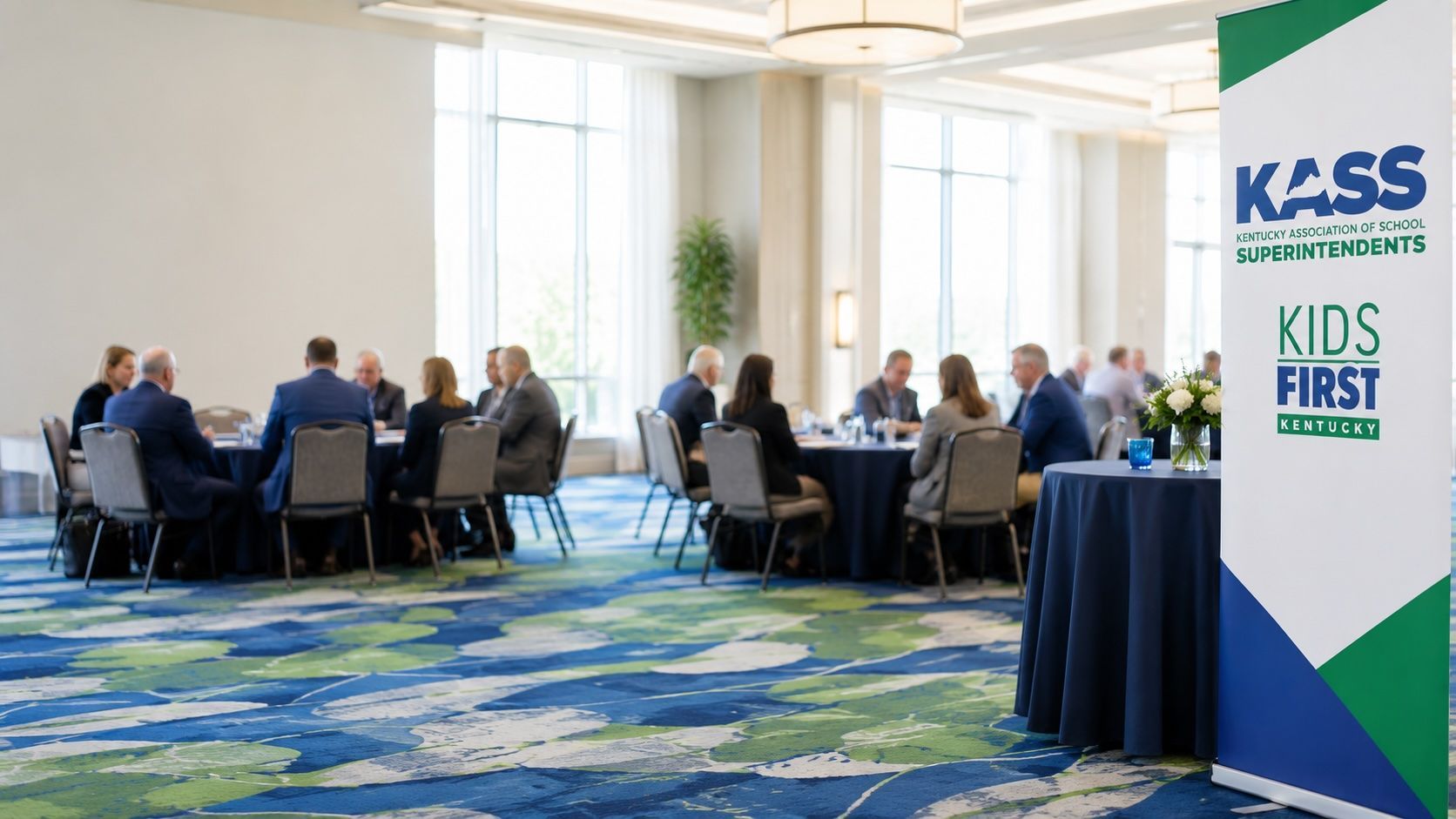
Strong schools are built on strong leadership. Across Kentucky, superintendents understand that thriving classrooms and successful districts depend on more than one leader at the top. They rely on principals, assistant principals, teacher-leaders, instructional coaches, and district staff who share responsibility for shaping the future of public education. At KASS, we believe that every district deserves a great superintendent, every school deserves a great principal, and every classroom deserves a great teacher. None of that happens by accident.

Leadership Development: The Foundation of Strong Schools
Recent statewide data affirms what local leaders see every day: leadership pipelines matter. When schools intentionally invest in developing leadership capacity, they cultivate innovation, stability, and long-term success. These pipelines ensure that when experienced leaders retire or change roles, a new generation is prepared to step forward with skill and vision.
As KDE continues expanding professional learning and leadership pathways, the message is clear: leadership development is not a luxury—it is essential. Kentucky schools are meeting rising expectations related to mental health, school safety, family engagement, career readiness, and personalized learning. Meeting these demands requires a deep bench of capable, well-supported leaders.

Leadership Pipelines: Essential, Not Optional
Investing in leadership pipelines means creating systems that identify, mentor, and prepare future school leaders. These systems help districts:
  • Identify teachers with leadership potential
  • Provide targeted coaching and mentoring
  • Offer professional development aligned with district goals

The Wallace Foundation reports that school leadership is second only to classroom instruction in its influence on student achievement. Kentucky districts that invest in structured pipelines are creating the conditions for sustained excellence.

But leadership development in Kentucky is not limited to adults. Increasingly, schools recognize that student leadership is essential to student success. Whether through student voice initiatives, service learning, or Portraits of a Learner that emphasize collaboration, initiative, and agency, schools are intentionally cultivating leadership in young people. As I often reminded my own leadership teams, if students aren’t in on it, our efforts will fall short of their intended impact. When we invest in strong adult leadership pipelines, we make possible equally strong student leadership pipelines—ensuring that learners graduate empowered, engaged, and ready to lead in their communities and careers.

Aligning with Kentucky’s Education Priorities
KASS has long emphasized that education leadership is a workforce priority. The 2026 KASS Legislative Priorities reinforce this message through policies that support educator recruitment, retention, and leadership development—broadening certification options, expanding job-embedded professional learning, and strengthening grow-your-own initiatives such as Educators Rising.

Just as importantly, KASS advocates for reducing unnecessary bureaucratic burdens on schools so leaders can focus on students, not paperwork. Some have argued that districts are growing administrative staff unnecessarily. In reality, the expansion of district-level responsibilities is a direct response to state and federal mandates—most of them well intentioned, but increasingly complex. These requirements lean heavily toward compliance rather than engagement, empowerment, or student impact, and they come with extensive reporting, monitoring, and oversight obligations.

When laws are passed quickly, without full consideration of the operational impact, they can create wide-ranging, unintended consequences—especially when they are underfunded or unfunded. These mandates directly shape district staffing patterns, making administrative support a necessity rather than a choice. If Kentucky wants leaner bureaucracy, the solution is not to cut people who are required to carry out legally mandated tasks—it is to review and streamline the mandates themselves so schools can redirect time, resources, and talent back into developing strong leaders at every level.

This vision aligns directly with United We Learn, which calls on Kentucky to rethink accountability and build systems that empower, rather than constrain, educators and local communities.

Investing in People for Student Success
Leadership pipelines strengthen the teaching profession and improve outcomes for every learner. Research from the National Bureau of Economic Research shows that schools led by effective principals see higher teacher retention and stronger student performance. And when adult leaders focus on empowering students, the impact multiplies. Schools with strong leadership cultures give students more opportunities to practice agency, take initiative, and develop the skills emphasized in Kentucky’s Portrait of a Learner.

KASS continues to advocate for legislative funding that prioritizes people over programs. Districts need flexibility and resources to provide competitive salaries, mentoring programs, and professional learning communities that elevate educators at every stage of their careers—and, in turn, elevate the leadership pathways available to students.

A Shared Vision for the Future
For Kentucky’s superintendents, this work is both urgent and hopeful. Leadership development provides stability during times of change and momentum during times of challenge. Across the Commonwealth, superintendents are cultivating a culture of mentorship, collaboration, and lifelong learning that benefits every student.

By strengthening Kentucky’s leadership pipeline—both for adults and for students—we ensure that every child learns in a school led by compassionate, highly skilled professionals committed to keeping Kids First. That is how we build a stronger, more resilient future for Kentucky’s public schools.
February 15, 2026
In a recent KASS Live episode, KHSAA Commissioner Julian Tackett addressed the growing complexity surrounding high school athletics in Kentucky. From transfer eligibility under open enrollment to NIL guardrails and mid-season movement, the pressures facing districts are increasingly operational and immediate. Tackett emphasized that the KHSAA’s responsibility is consistent rule application grounded in member-approved policy, while superintendents remain central to maintaining fairness, clarity, and community trust when eligibility questions arise. The conversation also underscored the importance of safety, supervision, and partnership. Whether addressing fan conduct, officiating shortages, or compliance concerns, athletics reflect district leadership and school culture. With clear communication and steady collaboration between districts and the KHSAA, superintendents can protect student opportunity while preserving competitive integrity and public confidence. 👉 Watch the full conversation with Julian Tackett
February 15, 2026
When education funding debates move into budget season, conversations often revolve around line items, percentages, and projections. For district superintendents, however, the implications are far more tangible. They are measured in teacher salaries, bus replacement schedules, classroom resources, and student services. This session’s budget conversation centers heavily on recurring revenue through the SEEK formula. While multiple targeted investments are under discussion, the clearest message emerging is the importance of the SEEK base and its connection to district stability. Why the SEEK Base Matters The SEEK base is not simply a number in statute. It is the primary recurring funding mechanism that districts rely on for sustainable planning. When the base increases meaningfully, districts gain the ability to invest in instruction, remain competitive in staff compensation, and address long-term workforce challenges. When it remains flat, the pressure shifts locally. Over time, districts have experienced diminished buying power relative to 2008 levels. Inflationary pressures and rising operational costs continue to compound that challenge. Without recurring revenue growth, districts absorb those increases within fixed budgets. The result is not theoretical. It is operational. A Local Example: Rockcastle County Schools A funding impact report shared this week illustrates how these pressures manifest at the district level . On page 1 of the report, Rockcastle County Schools documents a 26 percent decrease in purchasing power compared to 2008. Bus replacement costs increased significantly, with a single bus rising from $97,115 in 2021 to $154,702 in 2026. The district will purchase four buses at a total cost of $618,808. Insurance costs tell a similar story. General and property insurance increased from $168,977 in 2020 to $467,555 in 2025 . Instructional curriculum now totals $1.2 million annually, and even a limited Chromebook replacement cycle at select grade 0 levels requires $300,000 plus additional charger Y . These are not optional expenses. They are core operational realities. Transportation and Instructional Tradeoffs On page 3 of the same report, Rockcastle details the transportation impact specifically . Fully funding SEEK transportation using prior-year spring data would provide $413,906, nearly funding three of the four buses needed for the upcoming year. Over a ten-year period, the district estimates a $7,040,240 deficit resulting from transportation not being fully funded . When transportation funding falls short, districts must redirect general fund dollars to close the gap. That shift carries instructional consequences: delayed salary adjustments, postponed program investments, and limited capacity to address workforce shortages. Superintendents presenting to budget committees emphasized this dynamic clearly. One district reported being funded at roughly 74 percent of actual transportation cost, requiring approximately $900,000 to be covered locally. The instructional opportunity cost of that gap is real. Tier I and Geographic Equity The third recurring revenue lever under discussion is Tier I equalization. An increase from 17.5 percent toward 20 percent has been referenced as a way to strengthen equity across districts with varying property wealth. As described in the Rockcastle report on page 4 , recurring SEEK funding supports: Expanded mental health services Special education and intervention staffing School resource officers Student services such as counseling and food access Cost-of-living salary increases Rising instructional programming costs These needs do not fluctuate annually. They are ongoing, and they require stable funding. The Power of Telling the Story The most effective advocacy this week did not rely on abstract percentages. It relied on district-level numbers and clearly articulated tradeoffs. Transportation funded at 71 to 74 percent. Four buses costing over $600,000. Insurance increases of nearly $300,000 in five years. A decade-long transportation deficit exceeding $7 million. These details shift the conversation from policy theory to district consequence. Legislators consistently respond to local impact framed through data and student outcomes. When superintendents connect SEEK base increases to competitive salaries, to workforce retention along border states, to expanded mental health supports, the budget conversation becomes grounded in operational reality. Recurring Revenue Is the Stability Strategy Targeted investments have value. School safety, induction programs, and principal mentoring initiatives all matter. But recurring revenue remains the foundation. The SEEK base, fully funded transportation using current data, and equitable Tier I adjustments represent structural stability. They allow districts to plan beyond a single fiscal year. They protect classroom resources from operational volatility. They restore balance between state and local funding responsibility. At the center of this discussion is not a formula. It is stewardship. District leaders are tasked with protecting instructional quality, sustaining safe environments, and maintaining public trust. Recurring revenue allows them to do that with foresight rather than reaction. Moving Forward Budget negotiations will continue to evolve. Early signals suggest interest in raising the SEEK base and improving transportation funding. Final outcomes will depend on continued engagement and clear communication from district leaders. The most effective approach remains consistent: Present the numbers. Connect them to instruction. Explain the consequence of inaction. Reinforce the long-term return on investment. As the Rockcastle report concludes, the return on investment is not abstract. It is the future leaders of Kentucky communities . In this budget cycle, the SEEK base is more than a funding mechanism. It is the clearest signal of the Commonwealth’s commitment to sustaining strong, stable, and future-ready public schools.
February 8, 2026
The Purpose Behind Synergy
February 8, 2026
In the KASS Live session with John Nash, superintendents were invited into a nuanced discussion about how generative AI is shaping the educational landscape and what it means for district leadership. Nash, Associate Professor of Educational Leadership Studies at the University of Kentucky and founding director of the Laboratory on Design Thinking, offered a grounded framework for understanding AI beyond hype and anxiety. He emphasized that the integration of AI should be deliberate, anchored in clear leadership goals and centered on supporting educators and learners rather than replacing essential human judgment. Throughout the conversation, Nash connected the promise of emerging technologies with enduring leadership principles — trust, reflection, and purpose. Rather than presenting AI as a side project or compliance task, he encouraged superintendents to consider how these tools might support problem-solving, instructional innovation, and operational clarity across their districts. His perspective reminded leaders that the essence of their role remains unchanged even as the tools evolve: guide people toward meaningful outcomes and keep students at the center of every decision. 👉 Watch the full conversation with John Nash
February 8, 2026
In this KASS Live episode, Beau Barnes — Deputy Executive Secretary of Operations and General Counsel for the Teachers’ Retirement System of Kentucky (TRS) — brought superintendents into a frank conversation about the health and future of the statewide retirement system that supports Kentucky’s educators. Barnes discussed the role of sustained investment, governance integrity, and transparent communication in ensuring that TRS remains a stable and dependable benefit for teachers and administrators alike. His insights underscored that secure and well-governed retirement systems are essential to recruiting and retaining high-quality staff across districts. Barnes also highlighted how reforms and strategic planning within TRS intersect with broader district priorities, from workforce stability to long-range financial forecasting. His discussion aimed to demystify complex pension topics and frame them in terms that district leaders can incorporate into their planning conversations. Rather than an abstract financial challenge, TRS became a lens through which superintendents could examine how retirement policy and operational decisions affect district morale, long-term hiring strategies, and community confidence in public education as a career pathway. 👉 Watch the full conversation with Beau Barnes: https://www.youtube.com/watch?v=0VgqkixoaAU&list=PL-5C6cZuwEFLtZQLLGV_A3n__fBWYWk6V&index=2
February 8, 2026
Representative Scott Lewis brought his perspective as both a former superintendent and current legislator to KASS Live, offering a forward-looking conversation on policy priorities shaping Kentucky’s public schools. Lewis discussed the importance of bipartisan efforts to refine the state’s accountability systems, strengthen the educator workforce, and reduce unnecessary regulatory burdens that can pull districts away from core instructional work. His insights blended legislative context with operational realities that superintendents face, bridging the gap between policy debate in Frankfort and decision-making in district offices. Throughout the session, Lewis emphasized that targeted investments — including support for classroom resources, workforce development, and pension stability — are essential to sustaining momentum in student achievement and operational excellence. He encouraged leaders to engage thoughtfully with lawmakers and framed collaboration as a strategic tool for advancing initiatives that align with district priorities. His conversation reinforced that legislative outcomes matter not just for compliance, but for their cumulative impact on student opportunities, district capacity, and community trust in public education. 👉 Watch the full conversation with Representative Scott Lewis: https://www.youtube.com/watch?v=WLcbk4AnClI
More Posts