November 14, 2025
Accountability in Kentucky’s public education system is strongest when it reflects the voices and values of local communities along with statewide priorities for reading, math, transition readiness, graduation, student growth and grade-level performance. Across the Commonwealth, districts are demonstrating how local innovation, data transparency, and community collaboration can transform how we define student success. By elevating both metrics and meaning, superintendents are building systems that not only meet state standards but also reflect the priorities of Kentucky families, educators, and students.
Reimagining Accountability through Local Voices
Kentucky’s approach to accountability has long emphasized state assessment results and compliance metrics. But superintendents across the state are asking an essential question: What if our accountability systems measured what matters most to our communities?
Districts like Kenton County, Fleming County, and Bullitt County are answering that call by building community-facing dashboards that align state-required data with locally meaningful measures. These dashboards showcase not just test scores, but also indicators like career readiness, student well-being, and authentic learning experiences.
Kenton County Schools has created an online dashboard that pairs academic results with student wellness data and career readiness outcomes, giving families a more holistic understanding of progress.
Fleming County Schools has built an interactive Portrait of a Graduate Dashboard that tracks academic growth, career readiness, and community engagement in real time. This local system reflects the district’s vision for transparent, community-centered accountability.
Bullitt County Schools has reimagined communication by sharing stories of teachers and students who embody the district’s goals, turning abstract data into relatable narratives.
Other districts, including Greenup, Shelby, and Butler counties, are also piloting new models that blend data, transparency, and storytelling, proving that accountability goes beyond compliance, focusing on clarity, connection and meaningful experiences.
Accountability as a Partnership
At its core, accountability should not be something done to schools; it should be built with schools and communities. Families want to see how their schools are preparing students for the future, but they also want evidence that reflects their own local priorities.
Dashboards that visualize data on career pathways, student engagement, and community service create a shared language of progress. When a district superintendent pairs a rising graduation rate with a student’s career pathway story, accountability becomes more than a number. It becomes a narrative of growth and opportunity.
Connecting Local Innovation to Statewide Vision
This movement toward locally aligned accountability directly supports the 2026 KASS Legislative Priorities, particularly the goal to “Launching a meaningful and modern education accountability system”
The United We Learn initiative, led by the Kentucky Department of Education (KDE), envisions an education system rooted in equity, innovation, and deeper learning. It calls for locally developed accountability structures that balance state oversight with the flexibility districts need to measure what matters most.
KASS has elevated superintendents voices in the development of this vision. Our association believes that district-driven accountability (guided by community voices and informed by real-world data) is essential to preparing students for lifelong learning and success.
As part of its 2026 advocacy platform, KASS continues to champion policies that:
- Empower districts to use authentic, locally developed measures of learning and growth.
- Encourage innovation in how schools report performance to families and communities.
- Support professional learning for superintendents and educators to implement next-generation accountability models.
- Provide the flexibility in the system to reflect the unique needs and opportunities of each community.
- Local Metrics in Action: From Data to Story
When data tells a story, communities engage. That’s the lesson coming from districts like Kenton and Fleming counties.
Instead of publishing charts filled with unfamiliar terms, these districts are using interactive dashboards and story maps to bring numbers to life. For example, a dashboard may show how many students completed dual credit courses, but it might also feature a short video of a student explaining how that course prepared them for college or a career in healthcare.
This blend of quantitative and qualitative reporting is reshaping how stakeholders perceive accountability. It’s not just about performance indicators; it’s about understanding impact.
Moreover, these approaches promote trust and transparency, which are key pillars in public education. Research from the National School Public Relations Association emphasizes that storytelling paired with data enhances community confidence and fosters long-term engagement. Kentucky districts are proving this to be true.
Building Capacity for the Future
KASS recognizes that building local accountability systems requires both resources and professional support. That’s why our 2026 legislative priorities include continued investment in educator development, particularly around data/assessment literacy and local communication strategies.
Superintendents must be equipped to lead not only instructional change but also narrative change by helping their communities understand what modern education success looks like. By aligning accountability with career readiness pathways, numeracy and literacy goals, and authentic learning experiences, districts ensure that local innovation complements statewide progress.
This work also ties to KASS’ long-term focus on education funding reform, ensuring that districts have the flexibility to direct resources toward initiatives that support locally defined outcomes.
A Kids First Approach to Accountability
Every element of this new accountability vision circles back to the KASS mission: putting Kids First.
When schools measure what truly matters (student engagement, well-being, and preparedness) they reinforce the belief that accountability should serve students, over systems. The shift toward local metrics ensures that the measures of success are as diverse as the communities they represent.
As KASS Executive Director Dr. Jim Flynn often reminds us, “Accountability is about strengthening how we practice and grow, as much as proving performance and impact.” This mindset empowers districts to take ownership of their data and design models that celebrate both progress and potential.
Looking Ahead: Accountability as a Living Practice
Kentucky’s superintendents are leading the way toward a more meaningful accountability future. They know that one-size-fits-all models cannot capture the diverse strengths of Kentucky’s school districts.
By elevating local voices and local metrics, we are shaping a system that measures not only student achievement but also the relationships, creativity, and resilience that define lifelong learning.
This work isn’t a moment in time; it’s a movement taking shape. As Kentucky continues to innovate under the inspiration of the United We Learn vision, KASS remains committed to advocating for policies that amplifies superintendent voices and builds traction for sustained progress into 2026 and beyond.
December 6-8 at the Louisville Marriott Downtown Organizations that support Kentucky public school districts can now register to exhibit, sponsor, or join as a Preferred Partner at the 2026 KASS Annual Conference, December 6-8 at the Louisville Marriott Downtown. The Annual Conference is the largest KASS gathering of the year, bringing Kentucky's school superintendents together for professional learning, peer connection, and conversation about the work ahead for their districts. For superintendents, the partners in the room are part of that work. For organizations, it is a direct and personal way to understand what district leaders need. What This Conference Means for Districts and Partners Kentucky's superintendents are the chief decision-makers for districts across the Commonwealth. They are accountable for governance, operations, and long-term student outcomes, and they come to KASS events to learn alongside peers and find partners who can help them do the job well. Because KASS is the state organization dedicated solely to superintendents, partners at the Annual Conference are in the room with the leaders who set direction and shape priorities for their districts. This year's conference theme is The Power of Possibility: Empowering Learners. Igniting Innovation. Transforming Education. Conference at a Glance

The KASS Fall Superintendents Summit brings Kentucky district leaders together September 8–9 in Lexington for focused conversation and peer connection. Limited sponsorship opportunities available for organizations committed to Kentucky public education.
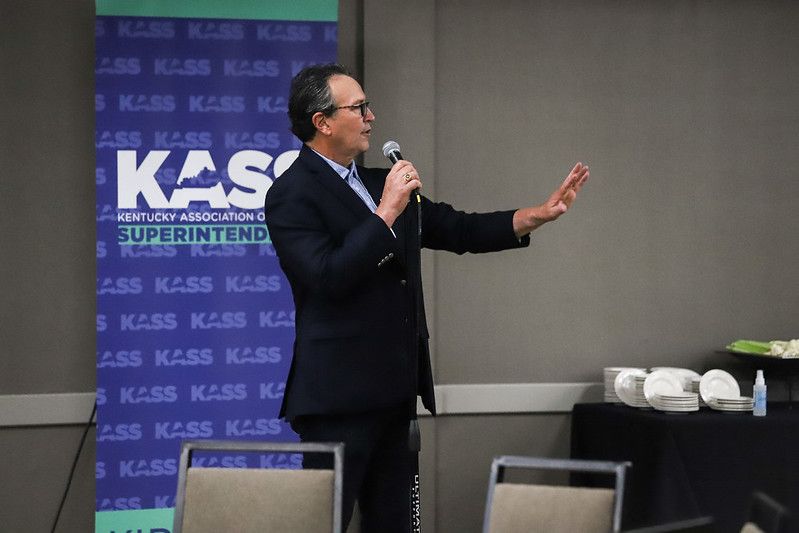
Join Kentucky superintendents at the KASS Summer Summit in Lexington. Limited sponsorship opportunities available for meaningful, relationship-driven engagement.

HB 757 phases out state equalization for facility nickels, and every Kentucky district is now on a clock. Here is what the 2026 session means for school construction funding and what superintendents must do before April 15.

Kentucky law requires full transportation funding — but the gap between obligation and appropriation costs districts $94 million a year. Here's what that means for students, buses, and classrooms across the Commonwealth.

Kentucky's HB 257 adds three new accountability indicators — National Board certification rates, 8th grade Algebra 1 enrollment, and FAFSA completion — to the state's overall district score. Here's why district leaders are raising concerns, and why this conversation isn't over.