October 30, 2025
Preschool is more than a stepping stone to kindergarten. It represents a critical investment in Kentucky’s children, families, and communities. Decades of research confirms that high-quality early learning experiences yield lifelong academic, social, and economic benefits. For the Commonwealth, expanding access to preschool is more than an educational goal; it represents both a moral and an economic imperative.
Laying the Foundation for Lifelong Success
Children’s earliest years are marked by rapid brain development. According to the Harvard Center on the Developing Child, more than one million new neural connections form every second during the first few years of life. These connections shape how children learn, interact, and problem-solve throughout their lives. When children attend high-quality preschool programs, they build foundational skills (language, emotional regulation, curiosity, and cooperation) that are directly linked to later academic and career success (Harvard University, 2023).
For children from low-income families or those with disabilities, early access to structured learning opportunities can be transformative. A longitudinal study by the National Institute for Early Education Research (NIEER) found that students who attended high-quality preschool were more likely to graduate from high school, pursue higher education, and earn higher wages as adults (NIEER, 2022). By investing in early education, Kentucky can narrow opportunity gaps before they widen.
Strengthening Families and Supporting the Workforce
Preschool access goes beyond education; it’s also essential to building a strong workforce. Families need reliable, affordable childcare to fully participate in the economy. The U.S. Chamber of Commerce Foundation estimates that Kentucky loses over $2 billion annually in economic activity due to childcare-related workforce disruptions (U.S. Chamber Foundation, 2023). When parents have confidence that their children are safe, supported, and learning, they can focus on their careers and contribute more productively to the workforce.
This connection between early education and workforce stability underscores the importance of viewing preschool as infrastructure, equally essential to roads, broadband, and utilities. Expanding preschool access strengthens Kentucky’s labor participation rates and builds a stronger foundation for future economic growth.
A Smart Investment with Lasting Returns
For every dollar invested in high-quality early childhood programs, society sees a return of up to $7 through improved educational outcomes, increased earnings, and reduced social costs, according to Nobel laureate economist James Heckman (Heckman, 2022). The long-term benefits ripple across generations: higher graduation rates, lower crime rates, better health outcomes, and stronger communities.
These outcomes make preschool a rare policy area that enjoys bipartisan support. Across Kentucky, leaders from every political perspective recognize the value of investing in children’s earliest years. When we put Kids First, we build stronger schools, stronger families, and a stronger Commonwealth.
Models of Collaboration Across Kentucky
Kentucky already has strong models demonstrating how collaboration can expand early learning opportunities. Across the state, public schools and private childcare providers have partnered to create blended preschool programs that reach more children while maintaining high quality standards. The Prichard Committee for Academic Excellence and the Kentucky Department of Education have led initiatives (such as community schools and literacy grants) that show how shared responsibility can produce meaningful results.
These partnerships serve as a blueprint for scaling success. By bringing together local districts, community organizations, parents/families, and private partners, Kentucky can ensure that every child, regardless of zip code or income, begins their educational journey with confidence.
Policy Leadership and the Path Forward
Superintendents play a critical role in advancing preschool access. As education leaders, they understand that early learning investment affects not only classroom readiness but also community vitality. KASS advocates for policy solutions that ensure stable funding, equitable access, and quality standards across all early learning programs.
Key policy actions include:
- Expanding state funding for preschool programs, particularly in underserved areas.
- Supporting mixed-delivery models that allow public schools and private providers to collaborate effectively.
- Improving educator pay and professional development to recruit and retain high-quality preschool teachers.
- Streamlining regulations to remove barriers that prevent families from accessing programs easily.
These actions align with KASS’s 2026 legislative priorities, which emphasize purposeful advocacy and proactive solutions to improve Kentucky’s public education system.
Economic and Community Impact
When preschool participation increases, communities thrive. Parents remain in the workforce, local businesses experience greater stability, and children enter kindergarten ready to learn. Studies from the Federal Reserve Bank of Minneapolis show that communities investing in early learning see higher employment rates, stronger tax bases, and reduced dependency on social services (Federal Reserve Bank of Minneapolis, 2021).
For rural areas, where workforce participation and childcare availability often lag, these investments are particularly crucial. Kentucky’s rural communities, like those in Eastern and Western Kentucky, stand to gain the most from expanded preschool access, both socially and economically.
Voices from the Field
Superintendents across the Commonwealth echo a common theme: preschool investment is an investment in Kentucky’s future. They witness firsthand how early learning changes lives. As one superintendent recently shared, “When children arrive in kindergarten ready to learn, everything changes, from classroom engagement to long-term academic success. The impact is immediate and enduring.”
Local partnerships also reveal how preschool builds stronger family-school connections. Parents involved in early learning programs are more likely to stay engaged throughout their child’s education, fostering a culture of collaboration between home and school. That engagement creates a ripple effect: students thrive academically, and schools become more responsive to community needs.
Putting Kids First
At KASS, our guiding principle is simple: When we put Kids First, everyone wins. Preschool is not an expense to be debated; it’s a commitment to the future of Kentucky’s children and the prosperity of our Commonwealth.
By expanding access to high-quality preschool, we give every child the chance to reach their full potential, every family the opportunity to participate in the workforce, and every community the tools to grow stronger together.
Investing in preschool is more than smart policy; it’s a promise to our future.
December 6-8 at the Louisville Marriott Downtown Organizations that support Kentucky public school districts can now register to exhibit, sponsor, or join as a Preferred Partner at the 2026 KASS Annual Conference, December 6-8 at the Louisville Marriott Downtown. The Annual Conference is the largest KASS gathering of the year, bringing Kentucky's school superintendents together for professional learning, peer connection, and conversation about the work ahead for their districts. For superintendents, the partners in the room are part of that work. For organizations, it is a direct and personal way to understand what district leaders need. What This Conference Means for Districts and Partners Kentucky's superintendents are the chief decision-makers for districts across the Commonwealth. They are accountable for governance, operations, and long-term student outcomes, and they come to KASS events to learn alongside peers and find partners who can help them do the job well. Because KASS is the state organization dedicated solely to superintendents, partners at the Annual Conference are in the room with the leaders who set direction and shape priorities for their districts. This year's conference theme is The Power of Possibility: Empowering Learners. Igniting Innovation. Transforming Education. Conference at a Glance

The KASS Fall Superintendents Summit brings Kentucky district leaders together September 8–9 in Lexington for focused conversation and peer connection. Limited sponsorship opportunities available for organizations committed to Kentucky public education.
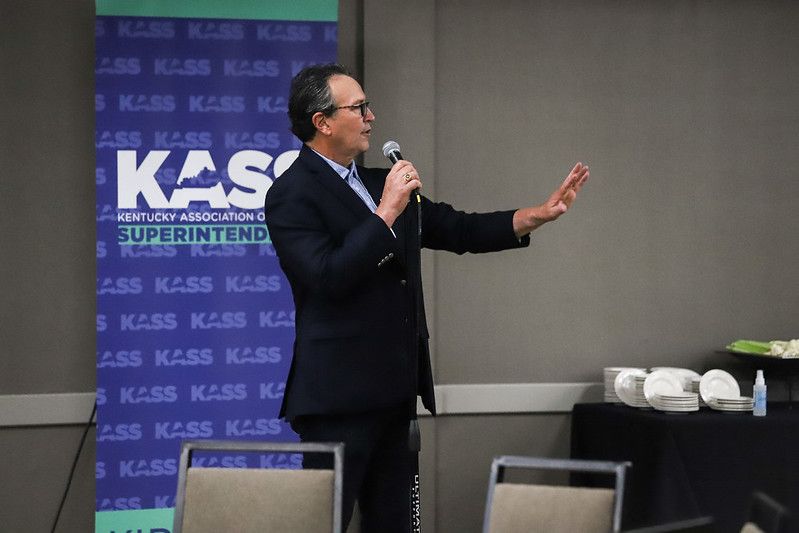
Join Kentucky superintendents at the KASS Summer Summit in Lexington. Limited sponsorship opportunities available for meaningful, relationship-driven engagement.

HB 757 phases out state equalization for facility nickels, and every Kentucky district is now on a clock. Here is what the 2026 session means for school construction funding and what superintendents must do before April 15.

Kentucky law requires full transportation funding — but the gap between obligation and appropriation costs districts $94 million a year. Here's what that means for students, buses, and classrooms across the Commonwealth.

Kentucky's HB 257 adds three new accountability indicators — National Board certification rates, 8th grade Algebra 1 enrollment, and FAFSA completion — to the state's overall district score. Here's why district leaders are raising concerns, and why this conversation isn't over.