October 16, 2025
Building the Workforce Kentucky’s Students Deserve
Across the Commonwealth, superintendents are confronting the same challenge: how to attract and keep the high-quality educators and staff every student deserves. Compensation matters, but as Kentucky’s education leaders know, it is not sufficient on its own. Building a durable education workforce requires clearing certification bottlenecks, aligning professional learning to the real work of teaching, reducing outdated mandates, and empowering local accountability grounded in United We Learn.
KASS’s 2026 priorities
point the way forward: recruit and retain high-quality teachers and staff, study and remove outdated mandates, and build momentum for an accountability system aligned to United We Learn, a model that supports innovation and meaningful measures of student learning.
The Workforce Reality: Vacancies, Turnover, and Competition for Talent
Recent data from the Kentucky Department of Education’s 2023–24 Educator Shortage Report
show that 13 percent of all posted vacancies remained unfilled for the entire school year, and districts reported 1,766 classified support staff vacancies as of September 1. These positions are vital to student learning and daily operations.
Turnover is equally costly. According to the Learning Policy Institute, teacher turnover, which includes costs for separation, recruitment, and onboarding, averages between $12,000 and $25,000
per teacher depending on district size. High turnover drains resources that could otherwise support classrooms and is linked to lower student achievement.
Kentucky cannot simply hire its way out of the challenge. The state must compete for talent by making it easier for educators to enter, remain, and grow in the profession.
Certification Reform: Widening the Gate Without Lowering the Bar
One of the most significant barriers to building Kentucky’s teacher workforce lies in certification. For decades, certification structures have been rigid, with limited flexibility for individuals who bring valuable experience into the classroom.
Kentucky has taken meaningful steps to address this issue. In June 2025, the Education Professional Standards Board(EPSB) reviewed recommendations from its Certification Structure Workgroup to modernize grade bands and expand flexible pathways. These proposals include multiple ways to demonstrate competency, broader grade-band options such as K–8 or 6–12, and smoother entry routes for experienced professionals, particularly in high-need secondary and career and technical education fields.
There are particular high needs areas in Kentucky. Almost every district across the state has experienced certification issues related to secondary math and science positions. Recommendations like general science certifications for 6-12 can help attract potential educators and free up certification quandaries at the secondary level. Currently, unlike say English, where a teacher could teach any of the grade levels in that content, science has highly specific degrees that require not just a science credential, but biology, or chemistry, or physics. The legislature can ensure all stakeholders are brought together to address these types of challenges.
Reforming certification does not mean lowering standards. It means removing barriers that keep capable people out while maintaining high expectations that protect students and the profession.
Professional Learning That Works: Job-Embedded, Ongoing, and Focused
Recruitment without retention is a revolving door. Research shows that sustained, job-embedded professional learning improves both teaching practice and student outcomes.
KASS’s 2026 priorities call for aligning professional development requirements with educator contracts to emphasize personalized, job-embedded learning. That alignment shows respect for educators’ time and ensures that professional learning translates into stronger instruction. Many districts have created wonderful models of this by taking advantage of flexible calendars, instructional coaches, and federal funding. We must ensure those are highlighted and we continue to create these opportunities for teachers across the commonwealth.
When our schools dedicate time for coaching, professional learning communities, and curriculum-aligned professional development, we treat teacher learning as essential infrastructure, not a compliance task. By giving them a voice in this learning, we help retain teachers in the profession.
Local Accountability and Local Empowerment
Accountability frameworks shape how educators experience their work. When accountability emphasizes growth, authenticity, and community goals, teachers are more likely to stay and thrive.
Kentucky’s United We Learn Council is developing a new accountability framework to present to legislators in 2026. The framework aims to capture the full breadth of student learning and opportunity, reflecting goals defined by local communities.
Educators come to work everyday hoping to make a difference for students. This means ensuring essential learning goals but when this happens, what this looks like, and how we go about achieving it are nuanced. Local accountability gives us the opportunity to have a more holistic view of a student as well as the tireless work our educators do each day.
This focus on local empowerment is central to KASS’s vision. Local accountability allows districts to design systems of growth rather than systems of punishment. As we continue building momentum for a unified accountability model that empowers districts to innovate for student success while maintaining clarity and comparability, we will attract and retain teachers to the profession.
Strengthening the Pipeline: From Middle School to Master Teacher
To compete for talent, Kentucky must inspire the next generation of educators long before they reach college. KASS supports expanding Educators Rising
chapters in every middle and high school so students can explore teaching as a meaningful career path.
Because most annual teacher demand results from attrition rather than new positions, retention is the most powerful workforce strategy. When early pipeline programs are paired with strong mentoring, induction, and leadership development, educators see a clear and lasting future within Kentucky schools.
Cut the Red Tape: Let Educators Focus on Students
Finally, superintendents across Kentucky report that overlapping mandates and reporting requirements create unnecessary burdens. Legislative and research briefings, including findings from the Kentucky Legislative Research Commission, have highlighted the need for modernization. Simplifying and streamlining these processes would return valuable time to teaching and leadership.
KASS applauds recent legislative progress and supports continued collaboration with policymakers to ensure that reforms are practical, measurable, and sustainable. The Red Tape Reduction Act was a valuable first step in streamlining evaluation requirements and professional learning. There is still much work to do, however, particularly with legislative unfunded mandates, departmental interpretation of existing laws and regulations, and unleashing technology to allow schools to spend more time on student achievement and less time on burdensome bureaucratic initiatives. KASS is ready to work with our legislative partners to identify more opportunities to continue to cut red tape.
A Call to Action
KASS stands ready to partner with lawmakers, the EPSB, the Kentucky Department of Education, higher education, and local communities to recruit, retain, and elevate Kentucky’s education workforce. Together, we can ensure that every student learns from teachers and staff who are well-prepared, well-supported, and proud to call Kentucky home.
December 6-8 at the Louisville Marriott Downtown Organizations that support Kentucky public school districts can now register to exhibit, sponsor, or join as a Preferred Partner at the 2026 KASS Annual Conference, December 6-8 at the Louisville Marriott Downtown. The Annual Conference is the largest KASS gathering of the year, bringing Kentucky's school superintendents together for professional learning, peer connection, and conversation about the work ahead for their districts. For superintendents, the partners in the room are part of that work. For organizations, it is a direct and personal way to understand what district leaders need. What This Conference Means for Districts and Partners Kentucky's superintendents are the chief decision-makers for districts across the Commonwealth. They are accountable for governance, operations, and long-term student outcomes, and they come to KASS events to learn alongside peers and find partners who can help them do the job well. Because KASS is the state organization dedicated solely to superintendents, partners at the Annual Conference are in the room with the leaders who set direction and shape priorities for their districts. This year's conference theme is The Power of Possibility: Empowering Learners. Igniting Innovation. Transforming Education. Conference at a Glance
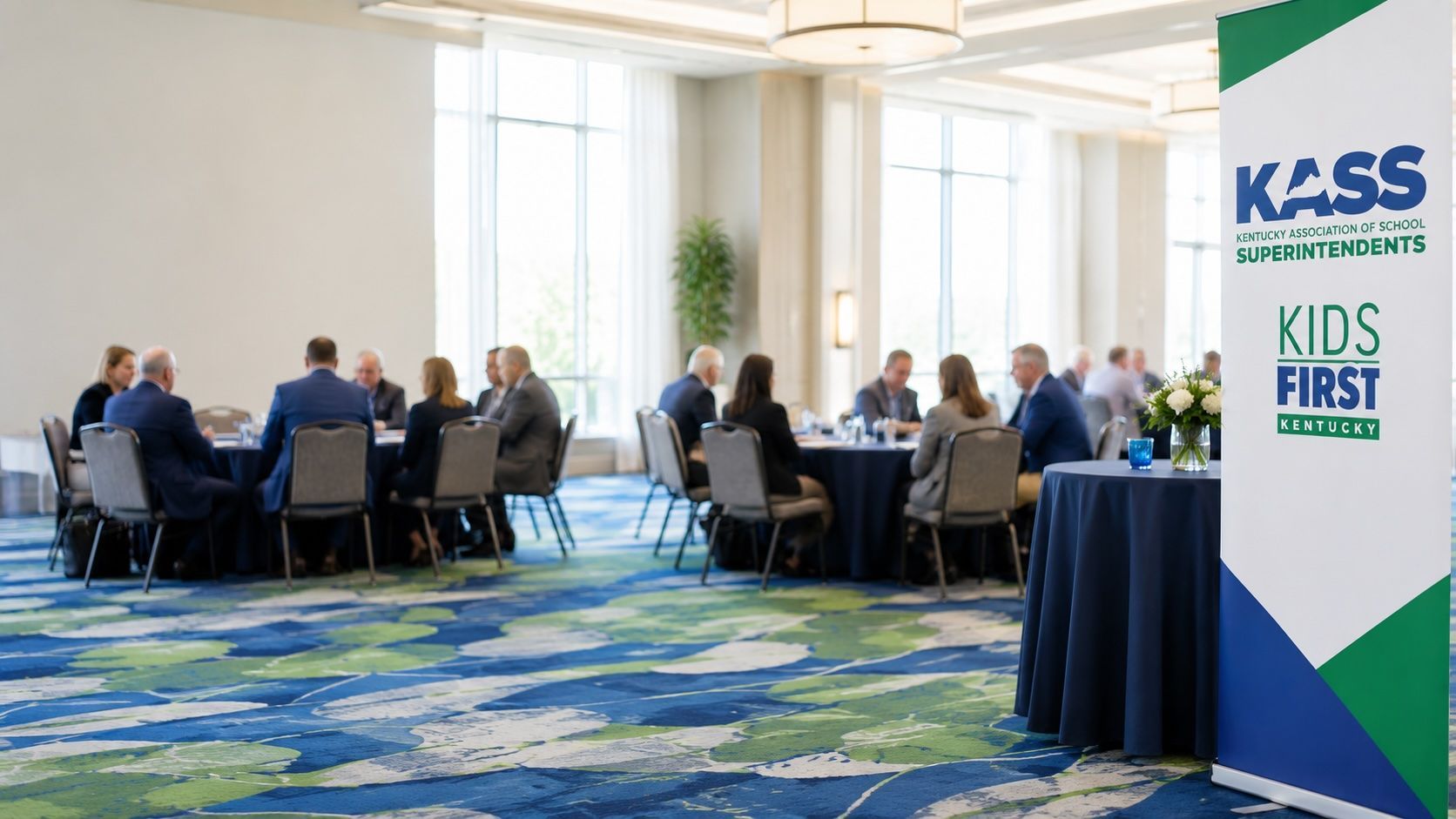
The KASS Fall Superintendents Summit brings Kentucky district leaders together September 8–9 in Lexington for focused conversation and peer connection. Limited sponsorship opportunities available for organizations committed to Kentucky public education.
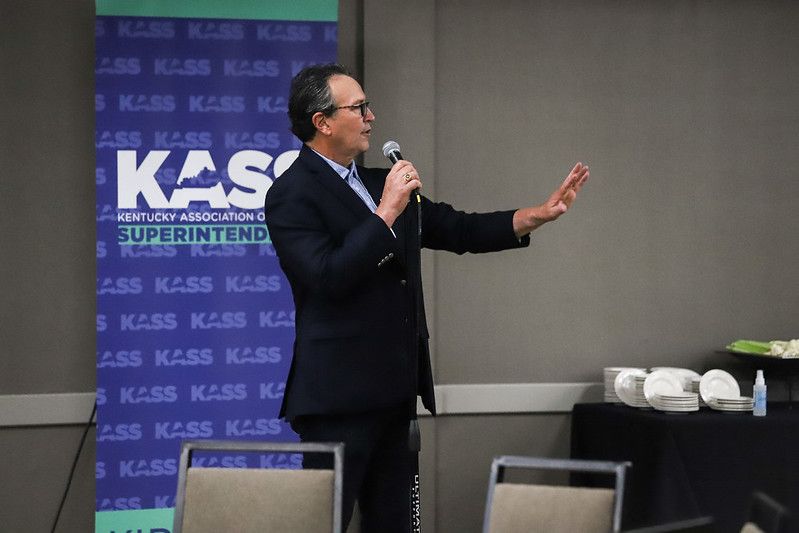
Join Kentucky superintendents at the KASS Summer Summit in Lexington. Limited sponsorship opportunities available for meaningful, relationship-driven engagement.

HB 757 phases out state equalization for facility nickels, and every Kentucky district is now on a clock. Here is what the 2026 session means for school construction funding and what superintendents must do before April 15.

Kentucky law requires full transportation funding — but the gap between obligation and appropriation costs districts $94 million a year. Here's what that means for students, buses, and classrooms across the Commonwealth.

Kentucky's HB 257 adds three new accountability indicators — National Board certification rates, 8th grade Algebra 1 enrollment, and FAFSA completion — to the state's overall district score. Here's why district leaders are raising concerns, and why this conversation isn't over.