When the Budget Becomes Policy: What This Session Signals for Kentucky School Districts

February 2, 2026

In legislative sessions, individual bills often attract the most attention. But for Kentucky’s public school districts, the budget is the policy that ultimately shapes everything else. This session is no exception.


The House budget proposal released this week provides an early and important signal about legislative priorities, governing philosophy, and the operating environment districts should prepare for over the next biennium. While the proposal is described as a “bare-bones” budget, the implications for districts are anything but minimal. For superintendents, the key question is not whether education was “protected” in name, but whether the budget creates the conditions necessary for stability, staffing, and sustained improvement.


This moment calls for clarity, not reaction. Understanding what the budget signals, how it will be reviewed, and where superintendent engagement matters most will be critical in the weeks ahead.


A Shift Toward Budget Scrutiny


A defining feature of the House proposal is its reliance on an intensified Budget Review Subcommittee process, particularly for P–12 education. This approach reflects a broader legislative intent to apply a quasi zero-based budgeting lens across state government.


In practical terms, this means programs and funding streams may be examined line by line, with legislators seeking justification not only for growth, but for continuation. The rhetoric accompanying the budget emphasizes spending restraint rather than revenue limitation, reinforcing the expectation that agencies and sectors demonstrate return on investment.


For education, this posture presents both a challenge and an opportunity. Districts have evidence of progress since the pandemic, including improved assessment outcomes and national recognition for recovery gains. These results did not happen in isolation. They are directly connected to targeted policy investments and sustained district-level execution. The budget review process will be the forum where that connection must be clearly and consistently articulated.


“Protected” Education and the Reality of Flat Funding


The House proposal characterizes education funding as protected. In technical terms, several core elements remain intact: full-day kindergarten continues, Tier I funding remains at 17.5 percent, and the actuarially required contribution for the Teachers’ Retirement System is fully funded.


However, protection is not the same as progress. The SEEK base remains flat. Transportation funding is held at current levels rather than being fully funded based on updated data. Tier I does not advance beyond the existing percentage.

For districts, flat funding across these recurring revenue streams has real consequences. Salary schedules are not static. Transportation costs do not hold steady. Inflation erodes purchasing power even when nominal dollars remain unchanged.


A flat SEEK base across the biennium also creates a structural issue in the second year of the budget cycle, effectively reducing state support when enrollment shifts and local calculations are applied. Over time, this dynamic constrains districts’ ability to plan responsibly, invest in staff, and sustain instructional momentum.


Recurring Revenue and the Staffing Reality


One of the most important connections highlighted this session is the relationship between recurring revenue and personnel decisions. Budget language continues to encourage districts to provide raises for certified and classified staff. Yet when the primary recurring revenue sources that support salaries are flatlined, districts are placed in an untenable position.


Providing raises without recurring revenue creates long-term financial pressure. Salary commitments compound year over year as employees advance on the schedule. Without growth in SEEK, transportation relief, or Tier I investment, districts are asked to absorb increasing obligations with static resources.


This tension is not theoretical. It affects hiring decisions, retention efforts, and the ability to compete with private-sector wages. The growing gap between education salaries and other workforce sectors is already reshaping labor markets across the Commonwealth. Budget decisions that fail to account for this reality risk undermining the very workforce stability legislators say they want to support.


Transportation: An Ongoing Pressure Point


Transportation funding remains a persistent concern. Previous efforts to fully fund transportation were based on outdated data, resulting in partial rather than full reimbursement for districts. The current proposal maintains funding at existing levels rather than correcting that gap.


Transportation costs are recurring, unavoidable, and rising. When state funding does not keep pace, districts must divert resources from classrooms to buses, fuel, and maintenance. Fully funding transportation based on current data would free recurring local dollars that could be reinvested in instruction and teacher compensation.


The interest among some legislators in addressing transportation funding suggests this issue is not closed. It will be one of the most important areas for superintendent engagement during budget review discussions.


Tier I and Equity Considerations


Tier I funding remains at 17.5 percent, below the 20 percent level discussed in the previous budget cycle. Tier I plays a critical role in narrowing gaps between districts with differing property wealth and reinforcing the principle that educational opportunity should not depend on geography.


Incremental increases to Tier I are among the most direct ways the budget can support equity while providing recurring revenue that districts can rely on. Holding Tier I flat preserves existing disparities rather than addressing them.


Transparency Bills and Administrative Capacity


Beyond the budget, several bills advancing this session carry operational implications that intersect directly with funding decisions. Financial transparency legislation, including expanded posting requirements for credit card statements and superintendent contracts, has moved quickly.


Transparency is not a contested value. Districts already comply with extensive reporting and open records requirements. The concern is capacity. New mandates require time, systems, and staff to implement responsibly. Without accompanying resources, these requirements increase administrative workload, particularly in smaller districts with limited central office staffing.


This context matters when legislators simultaneously express concern about administrative growth. Policy choices that add reporting obligations while criticizing administrative capacity create contradictory pressures at the district level.


The Importance of Local Fiscal Impact


Several proposals this session raise questions about local revenue, including constitutional amendments affecting property taxes. While state-level fiscal impacts may be documented, the local consequences for school districts are often unclear or unaddressed.


School districts are among the largest recipients of local property tax revenue. Changes that reduce local growth without replacement funding directly affect district budgets, staffing, and services. Requesting comprehensive local fiscal impact statements is not procedural resistance. It is responsible governance.


Why Superintendent Engagement Matters Now


The budget is not final. The most consequential decisions will be shaped during the Budget Review Subcommittee process and subsequent negotiations. Many of these discussions occur outside formal hearings, making relationships and early engagement essential.


Superintendents bring credibility grounded in operational reality. The progress districts have made since the pandemic, the pressures they face in staffing and transportation, and the limits of flat funding are not abstract concepts. They are lived realities in every community.


Clear, consistent messaging focused on recurring revenue, sustainability, and return on investment will matter more than volume or rhetoric. This is the moment to reinforce that education outcomes improve when policy and funding are aligned with implementation capacity.


Staying Steady in a Compressed Session


Legislative sessions move quickly, and budget cycles move even faster. Amid a long list of bills and shifting headlines, the underlying budget framework deserves sustained attention.


For Kentucky’s superintendents, steadiness is the goal. Staying aligned around core priorities, engaging early where decisions are being shaped, and focusing on operational consequences rather than political framing will protect districts and students alike.


The budget will determine what districts can realistically deliver over the next two years. Treating it as the central policy document it is remains the most effective advocacy strategy this session.

February 15, 2026
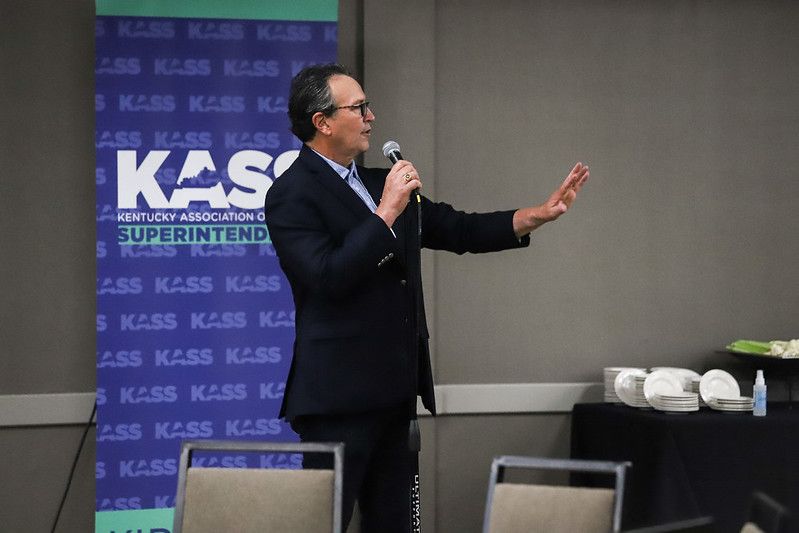
In a recent KASS Live episode, KHSAA Commissioner Julian Tackett addressed the growing complexity surrounding high school athletics in Kentucky. From transfer eligibility under open enrollment to NIL guardrails and mid-season movement, the pressures facing districts are increasingly operational and immediate. Tackett emphasized that the KHSAA’s responsibility is consistent rule application grounded in member-approved policy, while superintendents remain central to maintaining fairness, clarity, and community trust when eligibility questions arise. The conversation also underscored the importance of safety, supervision, and partnership. Whether addressing fan conduct, officiating shortages, or compliance concerns, athletics reflect district leadership and school culture. With clear communication and steady collaboration between districts and the KHSAA, superintendents can protect student opportunity while preserving competitive integrity and public confidence. 👉 Watch the full conversation with Julian Tackett
February 15, 2026
When education funding debates move into budget season, conversations often revolve around line items, percentages, and projections. For district superintendents, however, the implications are far more tangible. They are measured in teacher salaries, bus replacement schedules, classroom resources, and student services. This session’s budget conversation centers heavily on recurring revenue through the SEEK formula. While multiple targeted investments are under discussion, the clearest message emerging is the importance of the SEEK base and its connection to district stability. Why the SEEK Base Matters The SEEK base is not simply a number in statute. It is the primary recurring funding mechanism that districts rely on for sustainable planning. When the base increases meaningfully, districts gain the ability to invest in instruction, remain competitive in staff compensation, and address long-term workforce challenges. When it remains flat, the pressure shifts locally. Over time, districts have experienced diminished buying power relative to 2008 levels. Inflationary pressures and rising operational costs continue to compound that challenge. Without recurring revenue growth, districts absorb those increases within fixed budgets. The result is not theoretical. It is operational. A Local Example: Rockcastle County Schools A funding impact report shared this week illustrates how these pressures manifest at the district level . On page 1 of the report, Rockcastle County Schools documents a 26 percent decrease in purchasing power compared to 2008. Bus replacement costs increased significantly, with a single bus rising from $97,115 in 2021 to $154,702 in 2026. The district will purchase four buses at a total cost of $618,808. Insurance costs tell a similar story. General and property insurance increased from $168,977 in 2020 to $467,555 in 2025 . Instructional curriculum now totals $1.2 million annually, and even a limited Chromebook replacement cycle at select grade 0 levels requires $300,000 plus additional charger Y . These are not optional expenses. They are core operational realities. Transportation and Instructional Tradeoffs On page 3 of the same report, Rockcastle details the transportation impact specifically . Fully funding SEEK transportation using prior-year spring data would provide $413,906, nearly funding three of the four buses needed for the upcoming year. Over a ten-year period, the district estimates a $7,040,240 deficit resulting from transportation not being fully funded . When transportation funding falls short, districts must redirect general fund dollars to close the gap. That shift carries instructional consequences: delayed salary adjustments, postponed program investments, and limited capacity to address workforce shortages. Superintendents presenting to budget committees emphasized this dynamic clearly. One district reported being funded at roughly 74 percent of actual transportation cost, requiring approximately $900,000 to be covered locally. The instructional opportunity cost of that gap is real. Tier I and Geographic Equity The third recurring revenue lever under discussion is Tier I equalization. An increase from 17.5 percent toward 20 percent has been referenced as a way to strengthen equity across districts with varying property wealth. As described in the Rockcastle report on page 4 , recurring SEEK funding supports: Expanded mental health services Special education and intervention staffing School resource officers Student services such as counseling and food access Cost-of-living salary increases Rising instructional programming costs These needs do not fluctuate annually. They are ongoing, and they require stable funding. The Power of Telling the Story The most effective advocacy this week did not rely on abstract percentages. It relied on district-level numbers and clearly articulated tradeoffs. Transportation funded at 71 to 74 percent. Four buses costing over $600,000. Insurance increases of nearly $300,000 in five years. A decade-long transportation deficit exceeding $7 million. These details shift the conversation from policy theory to district consequence. Legislators consistently respond to local impact framed through data and student outcomes. When superintendents connect SEEK base increases to competitive salaries, to workforce retention along border states, to expanded mental health supports, the budget conversation becomes grounded in operational reality. Recurring Revenue Is the Stability Strategy Targeted investments have value. School safety, induction programs, and principal mentoring initiatives all matter. But recurring revenue remains the foundation. The SEEK base, fully funded transportation using current data, and equitable Tier I adjustments represent structural stability. They allow districts to plan beyond a single fiscal year. They protect classroom resources from operational volatility. They restore balance between state and local funding responsibility. At the center of this discussion is not a formula. It is stewardship. District leaders are tasked with protecting instructional quality, sustaining safe environments, and maintaining public trust. Recurring revenue allows them to do that with foresight rather than reaction. Moving Forward Budget negotiations will continue to evolve. Early signals suggest interest in raising the SEEK base and improving transportation funding. Final outcomes will depend on continued engagement and clear communication from district leaders. The most effective approach remains consistent: Present the numbers. Connect them to instruction. Explain the consequence of inaction. Reinforce the long-term return on investment. As the Rockcastle report concludes, the return on investment is not abstract. It is the future leaders of Kentucky communities . In this budget cycle, the SEEK base is more than a funding mechanism. It is the clearest signal of the Commonwealth’s commitment to sustaining strong, stable, and future-ready public schools.
February 8, 2026
The Purpose Behind Synergy
February 8, 2026
In the KASS Live session with John Nash, superintendents were invited into a nuanced discussion about how generative AI is shaping the educational landscape and what it means for district leadership. Nash, Associate Professor of Educational Leadership Studies at the University of Kentucky and founding director of the Laboratory on Design Thinking, offered a grounded framework for understanding AI beyond hype and anxiety. He emphasized that the integration of AI should be deliberate, anchored in clear leadership goals and centered on supporting educators and learners rather than replacing essential human judgment. Throughout the conversation, Nash connected the promise of emerging technologies with enduring leadership principles — trust, reflection, and purpose. Rather than presenting AI as a side project or compliance task, he encouraged superintendents to consider how these tools might support problem-solving, instructional innovation, and operational clarity across their districts. His perspective reminded leaders that the essence of their role remains unchanged even as the tools evolve: guide people toward meaningful outcomes and keep students at the center of every decision. 👉 Watch the full conversation with John Nash
February 8, 2026
In this KASS Live episode, Beau Barnes — Deputy Executive Secretary of Operations and General Counsel for the Teachers’ Retirement System of Kentucky (TRS) — brought superintendents into a frank conversation about the health and future of the statewide retirement system that supports Kentucky’s educators. Barnes discussed the role of sustained investment, governance integrity, and transparent communication in ensuring that TRS remains a stable and dependable benefit for teachers and administrators alike. His insights underscored that secure and well-governed retirement systems are essential to recruiting and retaining high-quality staff across districts. Barnes also highlighted how reforms and strategic planning within TRS intersect with broader district priorities, from workforce stability to long-range financial forecasting. His discussion aimed to demystify complex pension topics and frame them in terms that district leaders can incorporate into their planning conversations. Rather than an abstract financial challenge, TRS became a lens through which superintendents could examine how retirement policy and operational decisions affect district morale, long-term hiring strategies, and community confidence in public education as a career pathway. 👉 Watch the full conversation with Beau Barnes: https://www.youtube.com/watch?v=0VgqkixoaAU&list=PL-5C6cZuwEFLtZQLLGV_A3n__fBWYWk6V&index=2
February 8, 2026
Representative Scott Lewis brought his perspective as both a former superintendent and current legislator to KASS Live, offering a forward-looking conversation on policy priorities shaping Kentucky’s public schools. Lewis discussed the importance of bipartisan efforts to refine the state’s accountability systems, strengthen the educator workforce, and reduce unnecessary regulatory burdens that can pull districts away from core instructional work. His insights blended legislative context with operational realities that superintendents face, bridging the gap between policy debate in Frankfort and decision-making in district offices. Throughout the session, Lewis emphasized that targeted investments — including support for classroom resources, workforce development, and pension stability — are essential to sustaining momentum in student achievement and operational excellence. He encouraged leaders to engage thoughtfully with lawmakers and framed collaboration as a strategic tool for advancing initiatives that align with district priorities. His conversation reinforced that legislative outcomes matter not just for compliance, but for their cumulative impact on student opportunities, district capacity, and community trust in public education. 👉 Watch the full conversation with Representative Scott Lewis: https://www.youtube.com/watch?v=WLcbk4AnClI
More Posts