Don’t Cut the Rope While Kentucky Schools Are Climbing
March 12, 2026
Don’t Cut the Rope While Kentucky Schools Are Climbing

Legislation targeting local school board taxing authority threatens Kentucky’s education progress at the worst possible time.
Kentucky's public schools are climbing. Harvard and Stanford researchers have both recognized Kentucky as one of the strongest education recovery stories in the nation since the pandemic. Graduation rates are up. The latest state assessment results showed continued progress statewide. This is a moment of real momentum - and it did not happen by accident. It is the result of dedicated school boards, talented and committed district staff, and a General Assembly that has made meaningful investments in recent budgets and enacted smart policies like the Read to Achieve and Numeracy Counts Acts. Kentucky's progress is a shared achievement - and the opportunity now is to keep the momentum and continue the ascent together.
It happened because communities invested. For over a decade, as state funding lost ground to inflation, locally elected school boards made hard decisions to ask their communities for more - and in community after community, voters said yes. The clearest measure of that shift is SEEK, Kentucky's primary education funding mechanism - the revenue that locally elected boards direct into classroom instruction and competitive salaries for teachers, principals, and support staff. Through SEEK, local communities are now contributing nearly 58% of the combined state-local effort. In 2008, that ratio was 60:40 in the state's favor. Local communities have been holding the rope. The question is whether the state will grab hold - and restore the balance this partnership requires.
That context matters enormously right now, because the Kentucky General Assembly is considering a package of bills that would restrict the very tools local boards have used to fill that gap.
Senate Bill 41 would replace Kentucky’s existing, citizen-driven petition process for challenging property tax rates with an automatic, mandatory election - at a cost of up to $50,000 per district - even when no community member has raised a concern. House Bill 757 would restrict local boards’ ability to utilize occupational, utility, and excise taxes that many districts depend on to sustain their investment in classrooms and workforce. At least eight additional bills have been filed this session targeting local taxing authority. Taken together, they represent a significant narrowing of the fiscal tools that allow local communities to invest in their schools.
Here is what makes this particularly consequential: state investment through SEEK has lost more than 25% of its purchasing power since 2008. The General Assembly has taken meaningful steps in recent budgets, and that progress is real and appreciated. But Kentucky's school districts are still operating with less buying power than they had in 2008 — a time when the gap between education workforce salaries and private sector counterparts was not nearly as wide as it is today. The funding gap has not been closed, and the work is not finished.
Constraining local revenue authority while that gap remains creates a fiscal vise - squeezing districts from both directions - and the communities harmed most are often those with the least capacity to absorb the pressure.
Kentucky’s Constitution requires an efficient system of common schools. That obligation has always been met through a genuine partnership between the state and local communities. That partnership only works when both sides are empowered to fulfill their roles.
“The General Assembly has taken meaningful steps — but the funding gap has not been closed. Constraining local revenue authority while that gap remains doesn’t restore balance. It locks in the imbalance.”
KASS is asking the General Assembly for three things: vote NO on SB 41 and preserve the petition-based process that already gives citizens a clear path to challenge any tax rate they oppose; remove the restrictions on local taxing authority in HB 757; and advance the Big Three state investments - SEEK base increases, full pupil transportation funding, and Tier 1 equalization growth - that Kentucky’s students are still waiting for.
Kentucky has earned its place as a national model in education recovery. Our superintendents, teachers, students, and communities have done the hard work. The General Assembly has shown it can be a real partner - in the budget and in policy. This is the moment to prove it again.
This is not the moment to pull back. This is the moment to hold the rope.
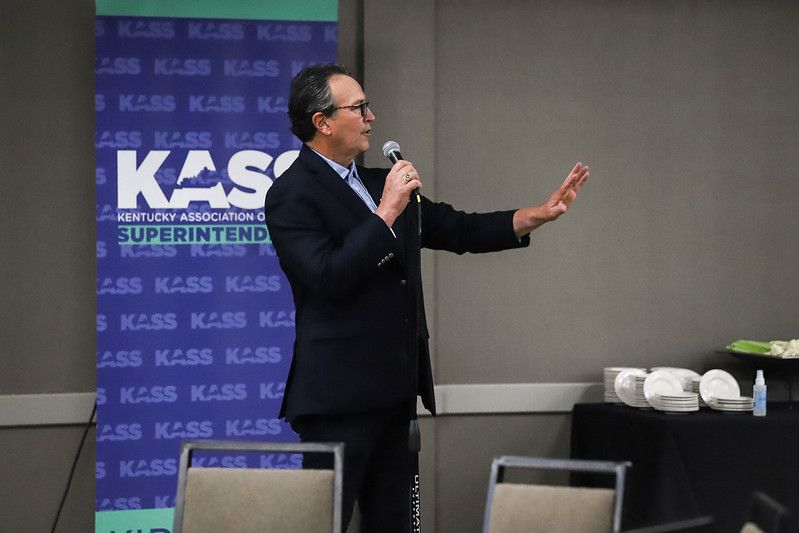
Join Kentucky superintendents at the KASS Summer Summit in Lexington. Limited sponsorship opportunities available for meaningful, relationship-driven engagement.

HB 757 phases out state equalization for facility nickels, and every Kentucky district is now on a clock. Here is what the 2026 session means for school construction funding and what superintendents must do before April 15.

Kentucky law requires full transportation funding — but the gap between obligation and appropriation costs districts $94 million a year. Here's what that means for students, buses, and classrooms across the Commonwealth.

Kentucky's HB 257 adds three new accountability indicators — National Board certification rates, 8th grade Algebra 1 enrollment, and FAFSA completion — to the state's overall district score. Here's why district leaders are raising concerns, and why this conversation isn't over.

Terry Brooks: Children, Data, and Superintendent Leadership

Kentucky superintendents are focused on House Bill 500 because final budget decisions on SEEK, transportation, and Tier 1 will directly shape what districts can deliver next year.